Easy Personal Development Habits For A Better Life
As we navigate the complexities of 2026, the global conversation around personal growth has shifted. We are no longer looking for radical, overnight transformations that burn us out by February. Instead, the trend this year is centered on micro-habits—small, sustainable, and scientifically backed actions that compound over time. In a hyper-connected world filled with constant digital noise, reclaiming your focus and mental clarity has become the ultimate competitive advantage.
Research from Duke University highlights a staggering reality: over 40% of our daily actions are driven by habit, not conscious decisions. This means that your life is essentially the sum of your automated routines. By intentionally upgrading these "silent architects" of your daily life, you aren't just changing your schedule; you are fundamentally redesigning your future. Whether you are aiming for improved physical health, enhanced productivity, or deeper emotional resilience, the secret to success in 2026 lies in the consistency of small, deliberate changes.
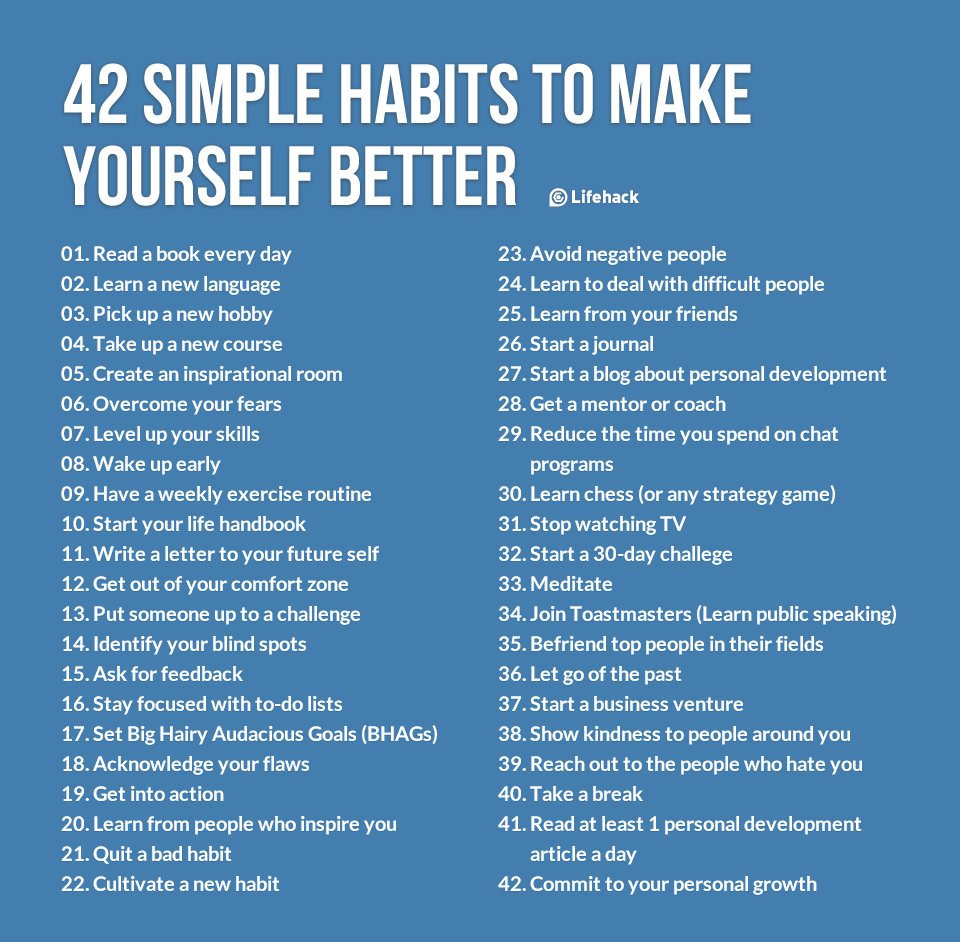
Why Daily Habits Are the Key to Success in 2026
The modern landscape of self-improvement is moving away from "hustle culture" and toward sustainable personal development. The pressure to achieve massive goals often leads to paralysis, but by breaking these goals down into tiny, manageable daily actions, we build momentum. This approach is not just a trend—it is a proven psychological framework for success.
The Compound Effect of Small Changes
When you commit to a small habit, such as a 10-minute walk or three minutes of morning gratitude, you might not see immediate results. However, looking at the aggregated calendar over weeks and months, the transformation is profound. Small, intentional habits provide the structure needed for consistent progress. They allow you to "show up for yourself" daily, which builds the self-trust necessary to tackle larger life challenges.
Automating Your Path to Growth
The beauty of a well-formed habit is that, eventually, it becomes automatic. When a positive behavior—like drinking water upon waking or reviewing your top three priorities—becomes second nature, it consumes less mental energy. This frees up your cognitive resources for creative problem-solving and deep work, which are the most valuable assets in the 2026 professional and personal landscape.
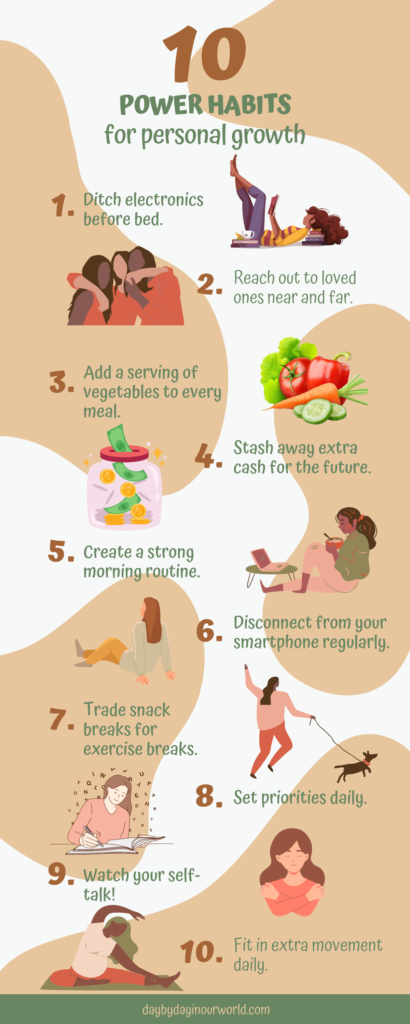
Core Pillars of Easy Personal Development
To build a balanced life, you must address multiple facets of your existence. You don't need to overhaul everything at once. By picking one or two habits from the following categories, you can begin a ripple effect that touches your health, mindset, and relationships.
Enhancing Mental Clarity and Focus
In an era of endless notifications, cultivating focus is a superpower. Digital distractions are the primary drain on our inner peace. To combat this, consider integrating these habits:
- Time Blocking: Dedicate specific, short windows to deep work.
- Mindful Disconnection: Set a "digital sunset" where screens are turned off an hour before bed.
- Single-Tasking: Train your brain to finish one task before jumping to the next.
Cultivating Emotional Resilience
Resilience is not about avoiding stress; it is about how you recover from it. Emotional resilience is a muscle you build through daily practice. Techniques like daily journaling or practicing gratitude allow you to process emotions constructively rather than letting them dictate your mood. By acknowledging your thoughts through introspection, you gain the clarity needed to make informed decisions, even when life feels chaotic.
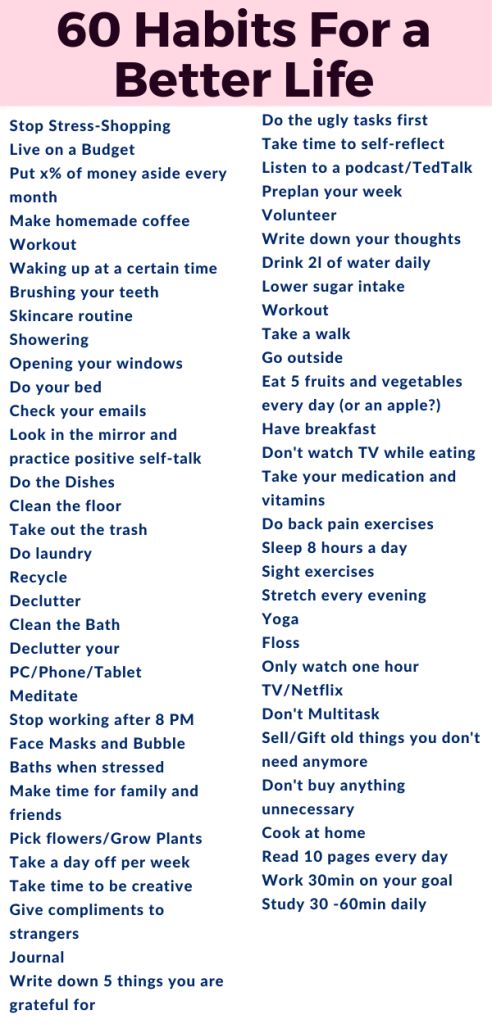
Proven Strategies for Habit Formation
Building a habit is a skill in itself. Many people fail because they try to change too much too soon. In 2026, the most effective strategy is to start small and track your progress.
The "Start Small" Philosophy
If you want to build a fitness habit, don't commit to an hour-long gym session immediately. Commit to a 10-minute movement routine. The goal is to establish the identity of someone who moves daily. Once the habit is locked in, you can naturally expand the duration. By focusing on one thing at a time, you prevent the overwhelm that leads to quitting.
Utilizing Digital Tools for Accountability
We live in the age of data, and using a habit tracking app can provide the external accountability you need to stay on track. Tools like Greatness or simple printable checklists allow you to gamify your growth. Seeing a streak of "checked" boxes is a powerful psychological trigger that reinforces positive behavior and keeps you motivated during the inevitable days when your willpower feels low.
Removing Obstacles
The environment you live in dictates your habits. If you want to drink more water, keep a bottle on your desk. If you want to read more, keep a book on your pillow. By removing friction from good habits and adding friction to bad ones (like putting your phone in another room), you make the path of least resistance lead to the life you desire.
The Science of Willpower: Why We Struggle and How to Win
In the fast-paced environment of 2026, many professionals mistakenly believe that willpower is an infinite resource. However, recent behavioral psychology suggests that willpower acts more like a muscle—it can be fatigued by constant decision-making throughout the day (Source 1). When you navigate a barrage of emails, social media updates, and workplace demands, your cognitive battery drains. By the time you reach the evening, your ability to make "good" decisions—like choosing a healthy dinner over takeout—is significantly compromised.
The Myth of "Grinding" Through Resistance
The trend this year is moving away from the "hustle until you drop" mentality. Instead, high-performers are adopting willpower conservation strategies. By automating the mundane, you preserve your mental energy for the tasks that truly move the needle.
- Decision Minimization: Prepare your clothes, meals, and to-do lists the night before.
- The "If-Then" Planning Method: Pre-decide your reaction to obstacles. For example: "If I feel a craving for sugar at 3 PM, then I will drink a glass of water and walk for five minutes."
- Environment Design: Keep your workspace clean and free of physical clutter to reduce cognitive load (Source 2).
Strengthening Your Willpower Muscle
While you should conserve willpower for big decisions, you can also train it to be more resilient over time. Small acts of self-discipline—like making your bed immediately upon waking or practicing 60 seconds of deep breathing—serve as "keystone habits." These small victories signal to your brain that you are in control, which builds the confidence required to tackle more significant challenges (Source 3).
The Role of Lifelong Learning in a Rapidly Evolving Market
With the rise of AI and automation in 2026, the concept of "job security" has been replaced by "skill agility." The most successful individuals are no longer those who know the most, but those who learn the fastest. Lifelong learning is no longer a hobby; it is a vital personal development habit for maintaining relevance and fulfillment.
Micro-Learning for the Modern Professional
You do not need to enroll in a formal degree program to stay ahead. The current trend favors "just-in-time" learning—acquiring specific knowledge exactly when you need it to solve a problem.
- The 15-Minute Rule: Dedicate 15 minutes each day to reading industry-relevant content or listening to a podcast in your field.
- Skill Stacking: Combine two unrelated skills to create a unique value proposition (e.g., combining data analysis with creative storytelling).
- Active Reflection: After learning something new, take five minutes to write down how you can apply that knowledge to your current work or personal life (Source 4).
Overcoming the "Knowledge-Action" Gap
Many people consume endless content but fail to implement it. To transform information into personal growth, you must bridge the gap between reading and doing. Treat every piece of information as a prompt for an experiment. If you read about a new productivity technique, test it for exactly three days before deciding if it works for your unique lifestyle (Source 2).
Nurturing Inner Peace in an Age of Anxiety
As global events continue to fluctuate, the need for inner peace has moved from a "nice-to-have" luxury to a fundamental requirement for mental health. Living in a state of constant "fight-or-flight" mode due to digital notifications and news cycles leads to burnout and emotional volatility. Cultivating a sanctuary of calm within yourself is the most effective way to remain grounded.
Practices for Immediate Calm
When you feel overwhelmed, your physiological response is often to shallow breathe and tense your muscles. Reversing this requires simple, physical interventions that signal safety to your nervous system.
- Box Breathing: Inhale for four seconds, hold for four, exhale for four, and hold for four. This is a favorite technique among high-stakes professionals for resetting the autonomic nervous system.
- Nature Immersion: Even if you live in a dense urban center in 2026, spending 10 minutes in a park or near a window with natural light can lower cortisol levels.
- Scheduled Solitude: In a world where we are always "on," scheduling 20 minutes of complete silence without devices is a radical act of self-care (Source 1).
Cultivating Gratitude as a Cognitive Filter
Gratitude is often dismissed as a soft skill, but it is actually a powerful tool for rewiring your brain. By consistently focusing on what is going well, you train your reticular activating system to scan for opportunities rather than threats. This shift in perspective is what separates those who feel victimized by their circumstances from those who feel empowered to change them.
- The Three-Blessings Journal: Every evening, write down three specific things that went well today and why they happened.
- Gratitude Reframing: When you face a setback, ask yourself: "What is the lesson here, and what can I be grateful for in this experience?"
- Verbal Appreciation: Expressing genuine gratitude to a colleague or family member not only strengthens your relationships but also reinforces your own positive outlook (Source 3).
The Power of Community and Social Accountability
Personal development is often viewed as a solitary pursuit, but the most sustainable growth happens in the context of community. Whether it is a mastermind group, a local fitness club, or an online accountability partner, connecting with like-minded individuals provides the social reinforcement necessary to stick to your habits when motivation wanes.
Finding Your Tribe
In 2026, digital platforms have made it easier than ever to find communities that share your specific growth goals. However, the quality of your circle matters more than the quantity. Surround yourself with people who challenge you, hold you accountable, and celebrate your progress.
- Peer-Led Accountability: Partner with someone to check in once a week regarding your habit progress. This simple social contract can increase the likelihood of success by up to 95% (Source 2).
- Mentorship Loops: Seek out mentors who are where you want to be, but also consider mentoring someone else. Teaching a concept is one of the fastest ways to master it yourself.
- The "No-Judgment" Zone: Ensure your community is a safe space where you can discuss failures as openly as you discuss successes. Vulnerability is the cornerstone of authentic growth.
Leveraging Social Pressure for Good
Human beings are inherently social creatures, and we are wired to seek the approval of our peers. You can use this to your advantage by publicly committing to a goal or sharing your progress with a supportive group. When you declare your intentions, you create a psychological "cost" to quitting, which helps you persist through the "messy middle" of any new habit formation (Source 4).
Designing Your Physical Environment for Success
Your environment is the invisible hand that guides your behavior. If your home or office is filled with friction-inducing obstacles, you will constantly fight an uphill battle. To make personal development "easy," you must optimize your surroundings to make the right choice the easiest choice.
The "Friction" Strategy
Behavioral scientists have identified that the easier an action is to perform, the more likely you are to do it. Conversely, the more friction you add to a negative habit, the less likely you are to perform it.
- To start a healthy habit: Make it visible and accessible. If you want to exercise, lay out your clothes the night before. If you want to eat fruit, place it on the counter in a bowl.
- To break a bad habit: Increase friction. If you find yourself scrolling too much, delete the app or put your phone in a drawer in another room. The extra 10 seconds required to retrieve it is often enough to break the impulse (Source 3).
The Impact of Lighting and Ergonomics
In 2026, with many people working in hybrid or remote setups, your workstation is a critical pillar of your physical health. Small adjustments can prevent chronic pain and boost focus.
- Lighting: Use warm lighting for evening relaxation and bright, cool-toned lighting for morning deep work.
- Movement Prompts: Set a timer to stand up and stretch every 50 minutes. This prevents the physiological stagnation that drains energy.
- Digital Minimalism: Organize your desktop and folders so that your digital "desk" is as clean as your physical one. A cluttered screen often leads to a cluttered mind (Source 1).
Managing Your Energy, Not Just Your Time
The most successful people in 2026 have realized that time is fixed, but energy is fluid. You can spend eight hours at your desk and accomplish nothing if your energy is low. Conversely, with high energy, you can achieve in two hours what would normally take a full day.
Identifying Your Energy Cycles
Everyone has a natural "circadian rhythm" that dictates when they are most alert and when they need to rest. By tracking your energy levels over a week, you can identify your peak performance windows.
- Morning Larks: Focus on high-complexity, creative work before noon.
- Night Owls: Save your deep work for the evening hours when your brain feels most active.
- The Mid-Day Slump: Recognize the natural dip in energy after lunch and schedule administrative, low-effort tasks during this time rather than forcing yourself to do deep work.
Recovery as a Performance Strategy
Recovery is not a reward for work; it is a prerequisite for high performance. Neglecting sleep, hydration, and movement will inevitably lead to a performance crash. In 2026, elite performers are treating their recovery sessions with the same seriousness as their work sessions.
- Sleep Hygiene: Maintain a consistent wake-up time, even on weekends, to stabilize your internal clock.
- Hydration: Dehydration is a primary cause of afternoon brain fog. Keep water within arm's reach at all times.
- Active Rest: Instead of scrolling during breaks, engage in "active rest" like walking, stretching, or simply looking out a window to reset your visual field (Source 4).
The Art of Self-Compassion in the Pursuit of Excellence
Perhaps the most underrated habit for long-term success is self-compassion. We often treat ourselves with more harshness than we would a friend or colleague. However, research indicates that self-criticism actually hinders progress by triggering a shame-based response that makes us want to give up when we fail.
Turning Failure into Feedback
In 2026, the mantra for personal growth is "fail fast and pivot." When you miss a day of your habit or fail to meet a goal, do not label yourself a failure. Instead, analyze the data. What caused the slip-up? Was the goal too ambitious? Did your environment change? Use this information to iterate and improve your strategy.
- The "Never Miss Twice" Rule: If you miss a habit one day, don't let it become a pattern. Focus all your energy on getting back on track the very next day.
- Positive Self-Talk: Replace "I am lazy" with "I am learning how to manage my energy better." The language you use to describe your journey shapes your identity (Source 2).
Celebrating Small Wins
We are quick to criticize our shortcomings but slow to celebrate our progress. By consciously acknowledging your wins, you release dopamine, which reinforces the behavior and makes you more likely to repeat it. Keep a "win log" where you record one thing you did well every day. Over time, this list serves as a powerful reminder of your capability and resilience.
Building Your Personal Development Roadmap for the Year
Now that you understand the pillars of habit formation, it is time to build your personal roadmap. Remember, the goal is not to implement all of these habits at once. The most sustainable approach is to layer habits incrementally.
The 30-Day Implementation Cycle
Select one core habit to focus on for 30 days. Don't worry about perfect execution; focus on the frequency. Once you feel that the habit has become a part of your identity, layer in a second habit.
- Week 1-2: Focus on the "anchor habit." For example, if you want to be more productive, focus only on your "three daily priorities" list.
- Week 3-4: Introduce a "supporting habit." Perhaps add a 10-minute morning walk to prime your brain for the day.
- Month 2: Assess your progress and refine. If a habit isn't working, don't be afraid to discard it and try a different one that better suits your lifestyle (Source 3).
Customizing Your Routine
Your life is unique, and your habits should be too. Take the principles discussed—focus, resilience, gratitude, and energy management—and adapt them to your professional and personal constraints. If you have a family, involve them in your habits. If you have a demanding career, integrate your habits into your existing workflows. The best personal development habit is the one that you can actually stick to for the long haul.
Sustaining Momentum Through Seasonal Shifts
As the year progresses, your external circumstances will inevitably change. A habit that worked in the spring might become difficult to maintain during the busy winter months. Adaptability is a key habit in itself. Being able to flex your routines without abandoning them entirely is what separates the long-term achievers from those who cycle between "on" and "off" phases.
The "Minimum Viable Habit" Concept
When you are traveling, sick, or buried under a massive project, your habits should shrink, not disappear. This is the Minimum Viable Habit (MVH). If your habit is to read for 30 minutes, your MVH is to read for one page. If your habit is to go to the gym for an hour, your MVH is to do five push-ups.
- Maintain the Identity: By doing even the smallest version of your habit, you maintain the identity of someone who "shows up."
- Prevent the "All-or-Nothing" Trap: The goal is to keep the habit cycle alive, even if the intensity varies. This prevents the "break" that often leads to months of inactivity.
- Seasonal Audits: Every three months, take an hour to review your habits. Ask yourself: "Which of these are still serving me? Which ones need to be adjusted for my current season of life?" (Source 1).
Embracing the Evolution
As you grow, your goals will change. A habit that was essential in your early career might become less relevant as you take on new responsibilities. Personal development is not a static destination; it is a dynamic process of shedding old patterns and adopting new ones that align with your current potential. Do not fear letting go of habits that have outlived their usefulness; instead, view it as a sign that you have successfully graduated to a new level of growth.
The Digital-Physical Balance: A 2026 Perspective
In 2026, the line between our digital existence and our physical reality is thinner than ever. We are increasingly augmented by technology, which offers incredible opportunities for productivity but also poses unique risks to our mental clarity. The ultimate personal development habit is conscious technological integration.
Curating Your Digital Diet
Just as you are what you eat, you are what you consume digitally. If your feed is filled with outrage, distraction, and comparison, your mindset will inevitably reflect that.
- The Audit: Spend one day tracking exactly what you consume online. Are these sources adding value, teaching you, or inspiring you? If not, unfollow or mute them.
- Intentional Consumption: Instead of passively scrolling, use your screen time to learn, create, or connect with genuine peers.
- The "Analog" Buffer: Ensure that your most important work—the work that requires deep thought—is done without the constant ping of notifications. Use "Do Not Disturb" modes as a tool for protecting your focus (Source 2).
Reclaiming Your Attention
Your attention is your most valuable currency. Every time you give it away to a notification, you are spending a piece of your life. By practicing mindful attention, you reclaim your agency. When you feel the urge to check your phone, pause for three seconds and ask: "Is this serving my current goal?" This simple pause is the difference between being a slave to your device and being a master of your output.
Cultivating a Growth Mindset in Every Interaction
Personal development isn't just about what you do in private; it's about how you show up in the world. Developing a growth mindset—the belief that your abilities can be developed through dedication and hard work—is the foundation upon which all other habits are built.
The Power of "Yet"
Whenever you encounter a challenge you cannot solve, add the word "yet." "I don't know how to do this… yet." "I am not where I want to be… yet." This linguistic shift is more than just positive thinking; it is a cognitive framework that keeps your brain open to possibilities rather than closed by limitations (Source 4).
- View Feedback as Information: When you receive criticism, try to strip away the emotional sting and look for the objective data. What can you learn from this?
- Challenge Your Comfort Zone: If you are not feeling slightly uncomfortable, you are likely not growing. Actively seek out tasks that test your current boundaries.
- Celebrate Others' Success: Instead of viewing the success of others as a threat, view it as proof of what is possible. This shifts your mindset from scarcity to abundance, which is essential for creative problem-solving (Source 3).
The Ripple Effect of Growth
When you commit to your own development, you inadvertently inspire those around you. Your improved focus, emotional stability, and productivity create a positive ripple effect in your family, your workplace, and your community. You become a living example of the fact that change is possible, and that even the smallest, most consistent habits can create a life of profound meaning and fulfillment. As you continue your journey through 2026 and beyond, remember that the goal is not perfection—it is the consistent, joyous pursuit of becoming the person you were meant to be.
The Future-Proofing Power of Personal Systems
In the landscape of 2026, the volatility of the global economy and the rapid advancement of AI mean that static skill sets are no longer sufficient. Personal development is shifting toward building resilient systems rather than just chasing goals. A system is a protocol for how you live, whereas a goal is a singular outcome. When you optimize your daily operations, you become "future-proof," capable of pivoting regardless of external changes.
Developing Your Personal Operating System
Think of your daily routine as an operating system (OS). If your OS is cluttered with outdated "software"—such as doom-scrolling, poor sleep, or reactive communication—your performance will lag. By upgrading your daily rituals, you increase your processing speed and output quality.
- The Weekly Review: Dedicate 30 minutes every Sunday to audit your last seven days. What habits slipped? Where did your energy dip?
- The "Zero-Inbox" Mindset: Apply this not just to email, but to your physical space and digital desktop. A clear environment reduces the "noise" that prevents deep work (Source 2).
- The Value-Alignment Check: Every month, verify that your daily habits actually serve your long-term values. If you value health, but your "daily habit" is sitting for ten hours, your system is misaligned.
Leveraging Bio-Feedback for Optimization
Modern personal development is increasingly data-driven. Wearable technology allows us to see exactly how our habits impact our physiology. You don't need a lab; you just need to listen to your body’s signals.
- Heart Rate Variability (HRV) Tracking: Use this as a proxy for your stress levels. If your HRV is low, prioritize recovery over high-intensity work.
- Glucose Monitoring: Observe how different foods affect your afternoon productivity. Stable energy is the bedrock of sustained focus.
- Sleep Architecture: Use sleep trackers to optimize your bedtime. Small adjustments in temperature or light can lead to a 20% increase in cognitive recovery (Source 1).
Cultivating Generosity and Social Capital
While personal development is often focused on the self, the most successful individuals in 2026 are those who actively build social capital. Your ability to collaborate, empathize, and contribute to the growth of others is a critical habit that compounds over time.
The Habit of "Giving Before Getting"
In a hyper-competitive digital world, the most reliable way to stand out is through radical generosity. This isn't just about charity; it’s about sharing knowledge, providing introductions, and offering support without an immediate expectation of return.
- The Five-Minute Favor: Spend five minutes daily sending a helpful resource or a warm introduction to someone in your network.
- Radical Listening: In your next meeting, practice "deep listening"—focusing entirely on understanding the other person's perspective before formulating your own response.
- Mentorship as a Feedback Loop: By teaching, you solidify your own knowledge and uncover gaps in your understanding (Source 4).
Building a Supportive Ecosystem
Your habits are contagious. By surrounding yourself with individuals who are also committed to growth, you create a social environment that makes excellence the default. Join masterminds, attend workshops, or simply start a "growth group" with two friends where you hold each other accountable for your weekly wins and struggles. This collective energy is the ultimate antidote to the isolation that often accompanies the pursuit of big goals.
Ultimately, the journey toward a better life is not a race to a finish line, but a commitment to the process of becoming. In 2026, the tools are at your fingertips, the research is clear, and the path is yours to define. By embracing these small, deliberate habits, you are not just surviving the complexities of the modern world; you are thriving within them. Your life is the sum of your daily choices—make them count.
References
-
Successconsciousness — 15 Habits for Personal Growth and Fulfillment – Success Consciousness, 2026
-
Believeinmind — 12 Effective Self-Development Habits for Better Future, 2026
-
Wellsoulmudrika — 21 Simple and Powerful Daily Habits To Improve Life Forever, 2026
-
Declutterthemind — 25 Good Habits for a Meaningful and Balanced Life, 2026
-
Plantoorganize — 50 Ways to Self-Improve (Simple Daily Habits That Actually Work), 2026
-
Shinesheets — 99 Good Habits For a Better Life + FREE Printable Checklist, 2026
-
Developgoodhabits — 47 Good Daily Habits List To Transform Your Life – Develop Good Habits, 2026
-
Onmycanvas — 23 Small, Daily Habits to Build a Better Life – On My Canvas, 2026