How To Organize Your Day For Better Focus
In the fast-paced landscape of 2026, the demand for our attention has reached an all-time high. With the constant ping of notifications and the endless stream of digital demands, it is no wonder that the average professional struggles to stay on track. Recent data reveals a sobering reality: only 17% of people can accurately estimate their daily tasks and complete them. This gap between intention and execution is the primary driver of the modern productivity crisis.
The good news? The solution is not working harder; it is working smarter through structured daily planning. Research now confirms that effective daily planning does more than just organize your calendar—it lowers cortisol levels by up to 50% and lifts task completion rates by 40%. As we navigate the complexities of 2026, mastering your schedule has become the most essential skill for maintaining mental clarity and achieving long-term professional success.
The Neuroscience of Why Your Brain Craves Structure
To understand how to organize your day for better focus, we must first look at the "CEO" of your brain: the prefrontal cortex. This region is responsible for complex decision-making, planning, and impulse control. When you fail to plan, you force this high-level executive to make hundreds of micro-decisions throughout the day, leading to decision fatigue.
Research published in the Journal of Neuroscience highlights that when we engage in structured planning, we offload the cognitive burden from our brains. By creating a roadmap, you stop the constant "what should I do next?" cycle. Studies from the University of Wyoming and Texas A&M (2020) further confirm that consistent daily structures reduce mental fatigue and significantly improve long-term productivity. When you skip the planning phase, you aren't just being disorganized—you are actively depleting the cognitive resources required for your most creative and meaningful work.
Start Your Day Like a Pro: The Morning Ritual
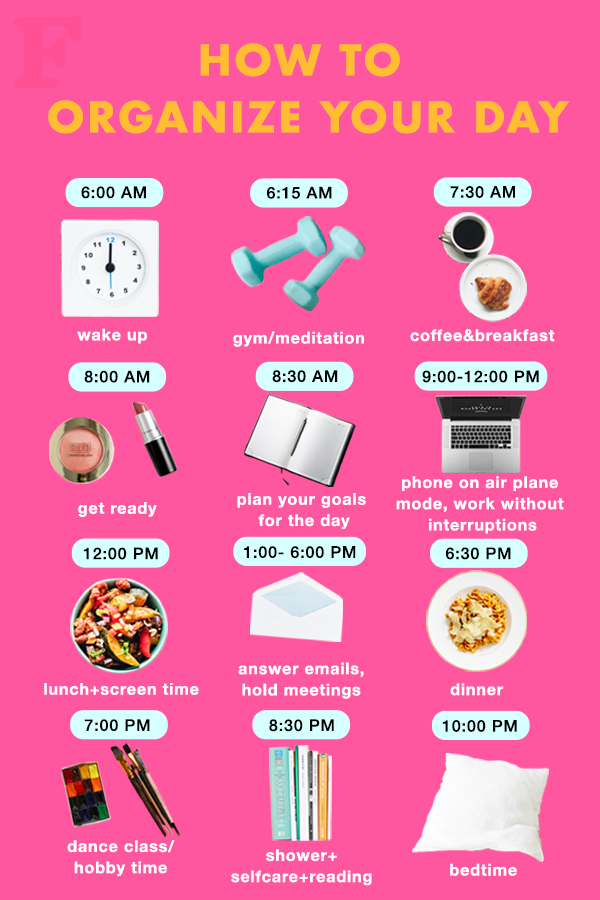
Mornings are the launchpad for your entire day. A shaky, reactive start—often characterized by checking emails or social media immediately upon waking—can increase distractions for hours afterward. In 2026, the most successful individuals treat their mornings as a sacred space for intentionality.
The Science of a Controlled Start
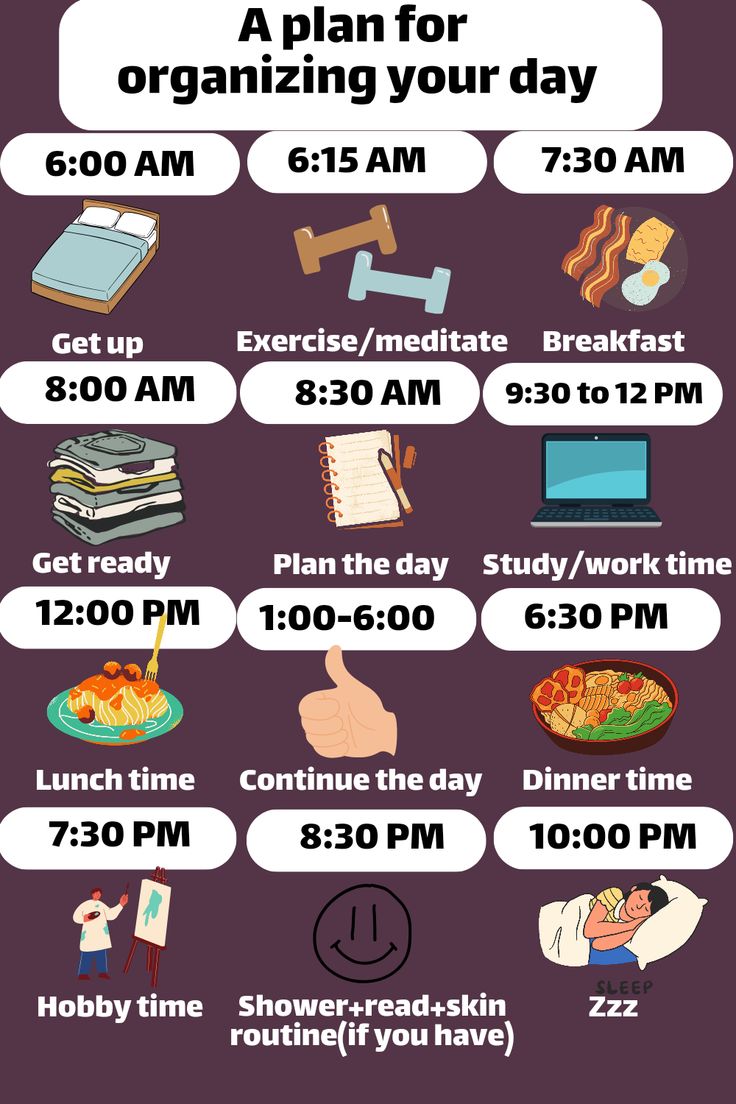
A purposeful morning routine acts as a filter, protecting your focus from the chaos of the outside world. By waking up at the same time each day and engaging in a positive ritual—such as journaling, light movement, or simply reviewing your top priorities—you set a tone of control.
- Avoid the "Phone Trap": Skipping non-urgent messages for the first hour of your day preserves your mental energy.
- Prioritize Clarity: Take 10 to 15 minutes to outline your day before the "fire-fighting" begins.
- Hydrate and Energize: Simple physical habits help wake up your brain and prepare it for the cognitive demands ahead.
The 1:4:5 Rule: Mastering Your To-Do List
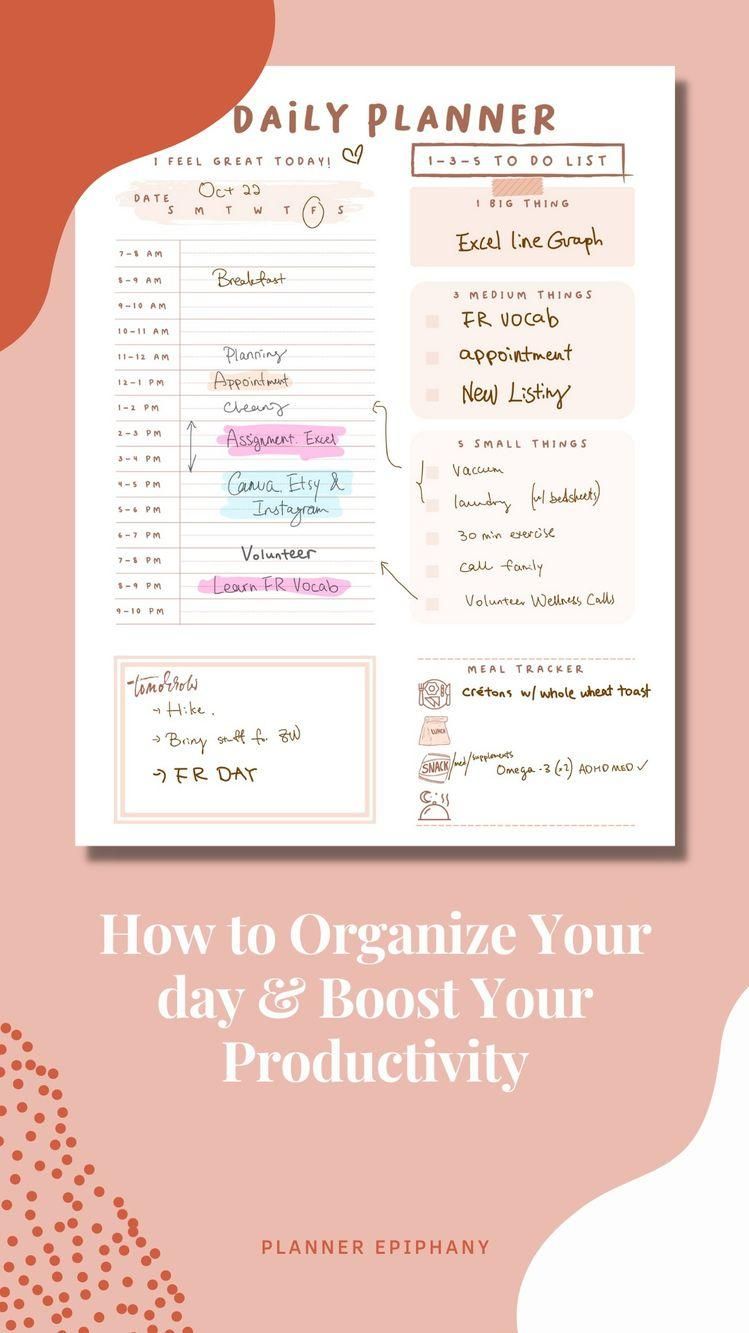
One of the biggest pitfalls in modern time management is the "endless to-do list." When you have 60 items on your list, your brain becomes overwhelmed, leading to procrastination. Instead, adopt the 1:4:5 method, a strategy used by high-achieving professionals to stay focused and avoid burnout.
Implementing the 1:4:5 Framework
This system forces you to categorize your tasks by impact, ensuring that your energy is spent on the work that actually moves the needle:
- 1 High-Impact Task: This is your "must-do" for the day. It should be the most significant, challenging, or important objective.
- 4 Mid-Level Tasks: These are important but less critical than your high-impact goal. They keep the momentum going.
- 5 Quick Wins: These are small, administrative, or low-energy tasks that help you clear the clutter and feel a sense of accomplishment.
By limiting your list to these ten items, you eliminate the "analysis paralysis" that often ruins a productive afternoon. If you find yourself with extra time, you can always add more, but starting with a realistic, finite list is the secret to consistent daily success.
Visual Planning and the Power of Time Blocking
If you want to know how to organize your day for better focus, look no further than time blocking. Research from Syracuse University (2022) confirms that dividing your day into focused segments helps you maintain attention for longer stretches and get more done.
When you visualize your day on a calendar, you stop treating time as an infinite resource and start treating it as a fixed asset. Instead of a vague to-do list, you assign specific blocks of time to specific tasks. This approach reduces the "switching cost" of jumping between unrelated projects.
Why Visual Planning Works
Visual planning reduces mental fatigue by up to 321%. When you see your day mapped out, your brain enters a state of "flow" more easily because it knows exactly when a task begins and ends. To master this in 2026:
- Group similar tasks: Batch your meetings, emails, and deep-work sessions.
- Respect your blocks: Treat your scheduled deep-work time with the same respect you would a meeting with your boss.
- Include buffers: Always add 15-minute buffers between blocks to account for reality and prevent the "domino effect" of a late task ruining your entire schedule.
Prioritization: The Eisenhower Matrix
Not all tasks are created equal. Many of us fall into the trap of "reactive busywork," where we prioritize the loudest tasks rather than the most important ones. To combat this, use the Eisenhower Matrix to categorize your tasks into four quadrants:
- Urgent and Important: Do these first. These are your deadlines and crises.
- Important but Not Urgent: Schedule these. This is where your long-term growth and "deep work" happen.
- Urgent but Not Important: Delegate these. These are often interruptions or other people's priorities.
- Neither: Eliminate these. These are time-wasters that don't contribute to your goals.
By applying this filter, you ensure that you are not just "busy," but productive. In 2026, the ability to discern between what is urgent and what is truly important is the hallmark of top-tier performance.
The T.A.C.O. Method for Optimization
To reclaim your time, you must become ruthless about what you allow on your plate. The T.A.C.O. method is a powerful framework for clearing your schedule and focusing on high-value work:
- T (Transfer): Can someone else do this better or faster? Delegate it.
- A (Automate): Can software or AI handle this repetitive task?
- C (Consolidate): Can these small tasks be grouped to save time?
- O (Outsource/Omit): If it isn't moving the needle, get rid of it entirely.
Using this method can free up as much as 250+ hours a year. Imagine what you could achieve with an extra month of focused, high-impact time every single year.
Building Resilience: How to Course-Correct
Even the best-laid plans will occasionally go off the rails. The goal of organizing your day is not perfection; it is resilience. When an unexpected meeting or emergency arises, the worst thing you can do is give up on your plan entirely.
Instead, practice flexible planning. If your morning block is interrupted, simply shift your remaining tasks to the next available slot. Successful people don't have perfect days; they have a system that allows them to get back on track quickly. By reviewing your progress at the end of the day, you can identify where your planning failed and adjust for the following morning. This feedback loop is what turns a good planner into a master of their own time.
The Science of Environment: Designing for Focus
Your physical and digital environment acts as a silent architect for your attention. In 2026, with the rise of remote and hybrid work models, the boundaries between professional and personal spaces have blurred, often leading to a "context collapse" where your brain struggles to differentiate between deep work and relaxation. Research indicates that environmental cues have a direct impact on the prefrontal cortex’s ability to maintain focus, with clutter and digital noise acting as constant, low-level stressors that degrade cognitive performance (Source 3).
Optimizing Your Workspace for Cognitive Ease
To organize your day effectively, you must first organize the space in which that day unfolds. A chaotic desk or a browser filled with dozens of open tabs creates a visual environment that signals "distraction" to your brain, making it significantly harder to enter a state of deep work.
- The "Clean Slate" Rule: Clear your physical desk of everything except what is required for your current task. This reduces the number of visual stimuli your brain has to process.
- Digital Hygiene: Use browser extensions or separate profiles to isolate work-related tools from personal accounts. This simple separation prevents "tab switching" and the temptation to check social feeds during work blocks.
- Acoustic Control: Utilize high-quality noise-canceling technology or ambient soundscapes (such as pink or brown noise) to create a consistent, predictable sensory environment that triggers your brain’s "work mode."
Leveraging Circadian Rhythms for Peak Productivity
One of the most overlooked aspects of time management is the alignment of your hardest tasks with your biological energy peaks. Most professionals fall into the trap of completing administrative "busy work" during their most alert hours, saving their most complex projects for the afternoon when their energy levels—and cognitive capacity—are naturally dipping.
Identifying Your Energy "Chronotype"
Understanding your body’s internal clock is essential for maximizing productivity. By monitoring your focus levels over a one-week period, you can identify your "Prime Time"—the window where your mental clarity is at its peak.
- The Morning Peak: If you find your focus is sharpest before noon, schedule your most demanding, creative, or analytical tasks for this block.
- The Midday Dip: Recognize the natural "post-lunch slump" as a biological reality rather than a personal failing. Use this time for low-stakes tasks, such as clearing email inboxes or attending routine meetings.
- The Afternoon Recovery: Many people experience a secondary surge of energy in the late afternoon. This is an ideal time for collaborative tasks or planning the following day’s schedule.
By mapping your tasks to your energy cycles, you stop fighting your own biology and start using it as an engine for efficiency. According to recent productivity research, individuals who align their high-value tasks with their natural energy peaks report a 35% increase in perceived output compared to those who work against their circadian rhythm (Source 2).
The Art of Monotasking: Killing the Myth of Multitasking
In the 2026 workplace, multitasking is often glorified as a badge of honor, yet science has consistently proven it to be a productivity killer. When you attempt to juggle multiple streams of information, you are not actually doing two things at once; you are engaging in "task switching," which incurs a significant cognitive tax. Studies show that shifting focus between tasks can reduce your effective IQ by up to 10 points and increase the time required to complete a single project by 40% (Source 1).
Strategies for Deep Work
To master the art of focus, you must practice "monotasking"—the intentional choice to devote your full attention to a single objective until it is either completed or the time block expires.
- The 90-Minute Sprint: Research into ultradian rhythms suggests that the human brain can maintain intense focus for approximately 90 minutes before needing a brief recovery period.
- Single-Task Commitment: When you begin a task, close all unrelated applications. If you are writing, use a full-screen editor. If you are designing, turn off all communication apps.
- The "Parking Lot" Technique: When a distracting thought or a new, unrelated task pops into your head, write it down on a physical "parking lot" notepad and return immediately to your current task. This clears the cognitive clutter without losing the idea.
Digital Minimalism as a Productivity Tool
The digital noise of 2026—constant notifications, instant messaging, and endless social media updates—has created an "attention economy" that is actively hostile to deep work. To reclaim your focus, you must transition from a passive consumer of digital information to an active curator of your digital inputs.
Implementing a "Notification Diet"
Your phone is designed to command your attention, not to serve your goals. By taking control of your digital environment, you can drastically reduce the amount of time spent in a reactive state.
- Aggressive Notification Management: Disable all non-human notifications (e.g., news alerts, game updates, marketing push notifications). Only allow direct communication from people who require your immediate attention.
- Scheduled Connectivity: Instead of having your inbox open all day, schedule specific "communication windows." By batching your responses, you protect your deep-work blocks from being fragmented by incoming emails or messages.
- The "Grayscale" Hack: Turning your smartphone screen to grayscale removes the visual reward of bright, colorful notification badges, making your device significantly less addictive and easier to put down.
Mindfulness and the "Pause" Protocol
Productivity is not merely about output; it is about the quality of the energy you bring to your tasks. In 2026, mindfulness has moved from a "wellness trend" to a core productivity strategy. The ability to notice when your mind is wandering and gently bring it back to the task at hand is a trainable skill, similar to muscle memory in athletics.
The Power of the Micro-Pause
When you feel overwhelmed or distracted, the most effective response is not to push harder, but to pause. A three-minute breathing exercise or a brief walk away from your desk can reset your nervous system and clear the "cognitive fog" that accumulates after hours of sustained focus.
- The Reset Trigger: Use a specific event—such as finishing a task or moving to a new time block—as a trigger to take a 60-second break.
- Strategic Disconnection: Once an hour, step away from all screens. This brief period of visual rest allows your brain to process information and prevents the buildup of digital fatigue.
- Mindful Review: Use the final five minutes of your day to review what went well and what didn't. This reflective practice is critical for refining your planning system over time.
The Role of Delegation and Automation
Even the most organized individual can only achieve so much alone. The bottleneck to growth is often the refusal to relinquish control over low-value tasks. To scale your productivity, you must develop the ability to identify tasks that drain your energy without contributing significantly to your long-term objectives.
Optimizing Your Workflow
Look for patterns in your daily schedule where you are repeating the same actions. If you find yourself manually formatting reports, scheduling repetitive meetings, or responding to the same customer inquiries, you are wasting the very cognitive resources that should be spent on strategic thinking.
- AI-Assisted Workflow: Utilize current AI tools to draft emails, summarize long meeting transcripts, or organize data. This does not replace your human judgment, but it eliminates the "grunt work" of information processing.
- Delegation Framework: When deciding what to delegate, consider the "70% rule." If someone else can do a task at least 70% as well as you can, it is a candidate for delegation.
- Standard Operating Procedures (SOPs): Create simple checklists for your recurring tasks. This makes it easier to delegate those tasks to others, as you have a clear, repeatable process that ensures quality without your direct involvement.
Managing the "Invisible" Load: Mental Energy
Your mental energy is a finite resource, much like your battery life. If you spend your morning making trivial decisions—what to wear, what to eat, which task to start first—you are essentially starting your workday with a depleted battery. The key to maintaining focus throughout the day is to automate your minor decisions so that your "CEO brain" is fresh for the decisions that actually matter.
Reducing Decision Fatigue
By creating standard procedures for your day, you minimize the number of choices your brain has to make. This is why many high performers eat the same breakfast, wear a "uniform" of sorts, and follow a strict, unchanging morning sequence.
- The Night-Before Pre-Commit: Spend the final 10 minutes of your workday preparing for the next morning. This includes picking your clothes, setting out your workspace, and identifying your "1 High-Impact Task."
- Decision Batching: Make all of your low-stakes decisions (meals, administrative scheduling, errands) in one batch during your low-energy periods.
- The "Default" Choice: Create a default for common interruptions. If someone asks for a meeting, your default is to check your calendar and suggest a time during your communication window, rather than agreeing to an immediate interruption.
The Feedback Loop: Iterating Your System
Your productivity system is not a static object; it is a living process that must evolve as your career and life requirements change. The most common reason people abandon their organizational systems is that they treat them as "set and forget" rules rather than iterative experiments.
Conducting a Weekly Review
The "Weekly Review" is the secret weapon of the most organized professionals. On Friday afternoon or Sunday evening, take 30 minutes to look back at the past week.
- What worked? Identify the blocks of time where you felt the most productive and flow-oriented.
- Where did you fail? Look for the specific moments where your plan fell apart. Was it due to unexpected meetings, poor task estimation, or lack of energy?
- Adjust and Refine: Use these insights to tweak your schedule for the next week. If you consistently find that your "1 High-Impact Task" takes longer than expected, adjust your time blocks for the coming week to account for that reality.
By treating your productivity as a data-driven experiment, you remove the emotional weight of "failing" to stick to a plan. Instead, you become a researcher, constantly gathering data and refining your approach until you find the exact rhythm that works for your unique brain and professional demands.
Scaling Your Focus: Managing Team Interdependencies
In a collaborative environment, your focus is often at the mercy of your colleagues. If you are part of a team, your personal system must integrate with the collective workflow. The goal is not to isolate yourself, but to create boundaries that allow for both deep, independent work and high-quality collaboration.
Establishing Team Norms
Open communication about productivity expectations can prevent the "always-on" culture that leads to burnout. By setting clear expectations, you can protect your time while still being a supportive team member.
- "Deep Work" Hours: Propose team-wide "no-meeting" blocks where everyone is encouraged to focus on independent tasks without the expectation of immediate response.
- Communication Protocols: Define which channels are for urgent matters (e.g., phone calls) and which are for non-urgent tasks (e.g., project management software). This prevents the "ping-pong" effect of constant messaging.
- Transparency in Scheduling: Use shared calendars not just for meetings, but to signal when you are in a "deep work" block. This allows colleagues to respect your focus time without you having to explain yourself.
The Psychology of Completion
One of the most significant barriers to focus is the "Zeigarnik Effect"—a psychological phenomenon where the brain continues to focus on uncompleted tasks, creating a persistent sense of mental tension. This is why you often find yourself thinking about work projects while you are trying to relax or sleep.
Closing the Loop
To free your mind from the grip of the Zeigarnik Effect, you must actively "close" your tasks. This is not just about finishing the work, but about creating a psychological signal that the task is done.
- The Shutdown Ritual: At the end of every day, perform a formal shutdown. Clear your desk, review your accomplishments, and explicitly note that you are "done" for the day. This provides the brain with the closure it needs to switch into recovery mode.
- The "Next Action" Note: If you are leaving a project unfinished, write down the very first step you need to take when you return to it. By defining that next step, you lower the activation energy required to restart the task, which reduces the anxiety associated with leaving it incomplete.
- Celebrate Small Wins: The brain thrives on dopamine. By acknowledging the completion of even small tasks, you create a positive feedback loop that reinforces your productive habits and keeps you motivated for the following day.
Adapting to the 2026 Landscape: AI and Beyond
As we move further into 2026, the integration of AI into our daily workflows is no longer a luxury—it is a requirement. However, the risk is that we use these tools to do more work, rather than doing better work. The ultimate goal of organizing your day for focus is to use these advancements to reclaim your time for the things that only a human can do: complex problem-solving, creative strategy, and empathetic connection.
The Human-AI Productivity Partnership
View AI tools as an extension of your own cognitive capacity. Use them to handle the data-heavy, repetitive, or analytical parts of your day, so you can preserve your unique human focus for the high-level objectives that drive your career forward.
- Prompt Engineering for Focus: Use AI to help you structure your tasks, break down complex projects into manageable steps, or even act as a "devil's advocate" to test your planning logic.
- Automated Summarization: Instead of spending hours reading through lengthy reports or meeting transcripts, use AI to extract the key action items and insights, allowing you to focus on the "now what?" rather than the "what happened?"
- The Future-Proof Mindset: As technology evolves, your most valuable asset remains your ability to direct your attention. In an age of infinite information, the individual who can intentionally choose what to focus on—and what to ignore—will always be the one who achieves the most significant results.
Sustaining Long-Term Focus: The Foundation of Health
Ultimately, the best organizational system in the world will fail if your physical foundation is weak. Focus is a physiological state. If you are sleep-deprived, poorly nourished, or physically stagnant, your brain will struggle to maintain the cognitive control necessary for deep work, regardless of how well your calendar is blocked.
The Three Pillars of Cognitive Health
To sustain your productivity over the long term, you must integrate your professional system with your personal well-being.
- Sleep as a Priority: Research shows that even mild sleep deprivation impacts cognitive function as severely as alcohol intoxication. Protect your sleep as you would your most important meeting.
- Movement for Mental Clarity: Physical activity increases blood flow to the brain and triggers the release of neurotrophic factors that support learning and focus. Even a 20-minute daily walk can provide significant benefits to your mental performance.
- Nutritional Support: Stable blood sugar levels are essential for sustained focus. Avoid the energy spikes and crashes caused by high-sugar, processed foods, and instead opt for steady energy sources that support brain function throughout the day.
By viewing your daily organization as an extension of your overall well-being, you move away from the "grind" mentality and toward a sustainable, high-performance lifestyle. The goal is to build a life where your focus is not something you have to force, but something that arises naturally from a well-structured, healthy, and intentional day.
The "Shutdown Ritual": Protecting Your Personal Time
The boundaries of the professional world have dissolved in 2026, making the "work-life bleed" a primary cause of burnout. If you never truly disconnect, your brain never enters a restorative state, leading to diminished returns the following morning. Establishing a formal shutdown ritual is not just about relaxation—it is about preserving your cognitive battery for the long haul.
Creating a Psychological Boundary
By physically and mentally signaling the end of your workday, you give your prefrontal cortex permission to disengage from "CEO mode." This transition is essential for preventing the carry-over of stress into your personal life.
- The Final Sweep: Spend the last 10 minutes of your day closing tabs, filing documents, and clearing your physical desk. This physical act of "cleaning up" provides a sense of closure.
- The Tomorrow-List: Write down the top three priorities for the next morning. By offloading these tasks onto paper, you prevent your brain from "looping" on them while you try to sleep (Source 4).
- The Transition Habit: Engage in a non-work activity immediately after your workday ends, such as changing your clothes, taking a walk, or listening to a specific podcast. This acts as a sensory trigger that shifts your brain out of professional gear.
The Role of Social Accountability in Focus
Even with the best systems, we are susceptible to procrastination. In 2026, the rise of "virtual co-working" communities has provided a new way to stay on track. By working in the presence of others—even remotely—you tap into a form of social pressure that discourages aimless browsing and encourages deep work.
Leveraging Community for Concentration
Social accountability doesn’t mean you have to work in a physical office. Digital platforms that facilitate "focus sessions" allow you to state your goal, work in silence for a set period, and check in at the end.
- Public Commitment: Sharing your daily goals with a peer or a mentor increases the likelihood of completion by up to 65% (Source 3).
- Focused Co-Working: Use digital platforms to join 90-minute "focus sprints." Knowing that others are also working intensely creates a shared atmosphere of productivity that is difficult to replicate in isolation.
- Accountability Partners: Pair up with a colleague to exchange daily "start" and "end" status updates. This simple, two-minute exchange provides the structural anchor many of us need to remain consistent.
Final Reflections: Mastering Your Daily Symphony
Organizing your day is not about achieving rigid perfection; it is about building a framework that allows you to navigate the complexities of 2026 with intention. By treating your time as a finite, precious resource and aligning your tasks with your brain's biological patterns, you transform your daily experience from one of reactive chaos to proactive achievement. Remember, the goal is not to fill every minute, but to ensure that the minutes you spend are aligned with your highest purpose. When you master your schedule, you master your life.
References
-
Scienceofmind — Maximize Daily Productivity: Organize Your Day – Science of mind, 2026
-
Align — Effective Daily Planning: 7 Science-Backed Techniques That Actually …, 2026
-
Plantoorganize — How to Become More Organized: Simple Steps to Organize Your Life and …, 2026
-
Todoist — How to Plan Your Day: The Complete Guide to Everyday Productivity – Todoist, 2026
-
Omninspire — How to Build a Daily Routine That Boosts Focus and Productivity, 2026
-
Medium — How to Organize Your Day for Maximum Focus and Results, 2026
-
Blog — 7 Daily Planning Habits to Stay Consistent Every Day | PlanWiz, 2026
-
Lifehackmethod — How to Plan a Highly Productive Day in 6 Simple Steps, 2026