How To Practice Forest Bathing At Home
In the fast-paced, screen-saturated reality of 2026, the ancient Japanese practice of Shinrin-yoku, or forest bathing, has evolved from a niche wellness trend into a necessary survival skill for the modern urbanite. As we navigate the complexities of a digital-first world, the simple act of immersing oneself in the sensory experience of nature has become a powerful antidote to burnout. While the ideal scenario involves a deep trek into a mature forest, the reality of our busy schedules often keeps us confined to our homes.
The good news? You don’t need a sprawling wilderness to reap the restorative rewards of nature. By learning how to practice forest bathing at home, you can effectively regulate your nervous system, lower your cortisol levels, and reclaim your mental clarity without ever leaving your front door.
The Science of Shinrin-yoku in 2026
Forest bathing is far more than a meditative walk; it is a scientifically backed health practice that emerged in Japan in the 1980s. Research consistently demonstrates that time spent in nature—or even simulated natural environments—triggers measurable physiological changes. When you engage in this practice, you are essentially borrowing the calming effects of the living world to support your stress physiology, including your heart rate, muscle tension, and breathing patterns.
Why Your Brain Craves Nature
In 2026, our brains are constantly bombarded with "effort cues"—the endless notifications, unfinished tasks, and digital noise that drive cognitive fatigue. Forest bathing provides the remedy by shifting your brain from a state of task-focus to sense-focus. By offering gentle sensory complexity that doesn't demand performance, nature allows your mind to enter a state of "soft fascination," which is essential for recovery.
Data from wellness consultants, such as John Keller, emphasizes that the human brain often fails to distinguish between deep forest immersion and a carefully curated natural environment at home. Studies from the University of Michigan have shown that even simulated nature exposure can improve working memory by 20%, while Stanford University research indicates that viewing nature imagery for as little as 40 seconds can significantly reduce mental fatigue.
Preparing Your Space for Indoor Immersion
To successfully practice forest bathing at home, you must treat your environment with intention. You do not need a dedicated room; rather, you need a space that minimizes interruptions and maximizes sensory connection.
Selecting Your Nature-Adjacent Spot
Choose the most nature-adjacent location available to you. This could be:
- A window with a view: A spot where you can see trees, a patch of sky, or a green garden.
- A porch or balcony: Even a small outdoor nook can serve as your sanctuary.
- A quiet corner: If you lack outdoor access, find a space with natural light and fresh air.
Once you have chosen your spot, it is vital to clear the area. Clutter creates visual noise that competes with your ability to relax. Remove electronic devices, work materials, and anything that triggers a task-oriented mindset. Silence your notifications to ensure that your 20-minute session remains uninterrupted.
Curating Natural Elements
If you cannot be in a forest, bring the forest to you. Use these "doorways for attention" to anchor your practice:
- Living greenery: Incorporate indoor plants like ferns, snake plants, or peace lilies to create a "mini-jungle."
- Natural textures: Place driftwood, river stones, or pinecones in your view.
- Aromatic triggers: Diffuse essential oils like cedarwood, pine, or sandalwood to mimic the woodland atmosphere. Research shows that simply inhaling these natural compounds can increase the activity of natural killer (NK) cells, which are vital for a robust immune system.

The Core 20-Minute Home Session
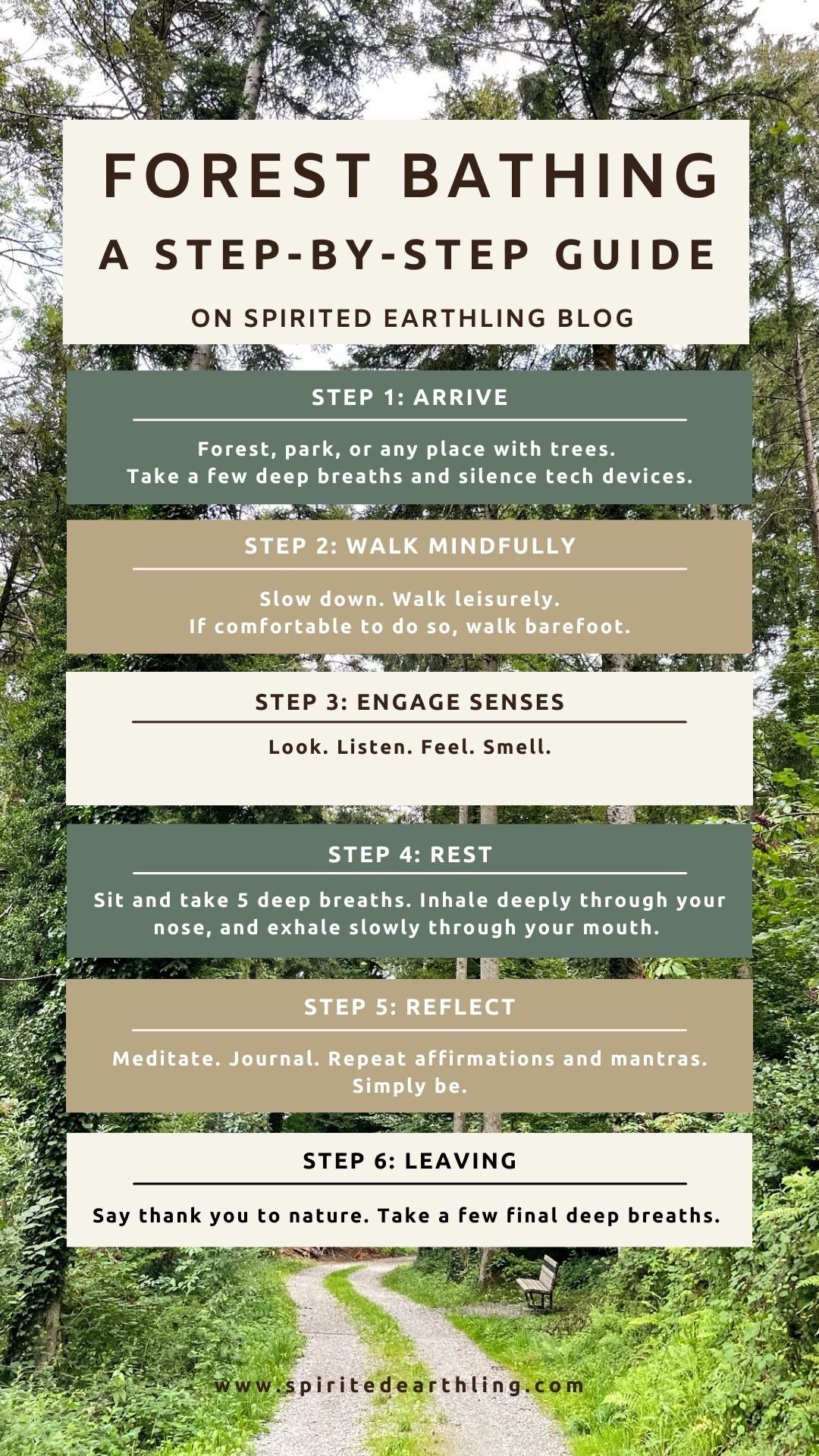
If you only commit to one thing, make it a 20-minute home session. This duration is long enough to shift your physiological state but short enough to fit into a demanding 2026 lifestyle.
Phase 1: Arrival (2 Minutes)
Start by "letting the day land." Sit or stand comfortably and bring your awareness to the weight of your body. Feel the support beneath you. This is not the time to solve problems; it is the time to allow your nervous system to downshift.
Phase 2: Sensory Engagement (15 Minutes)
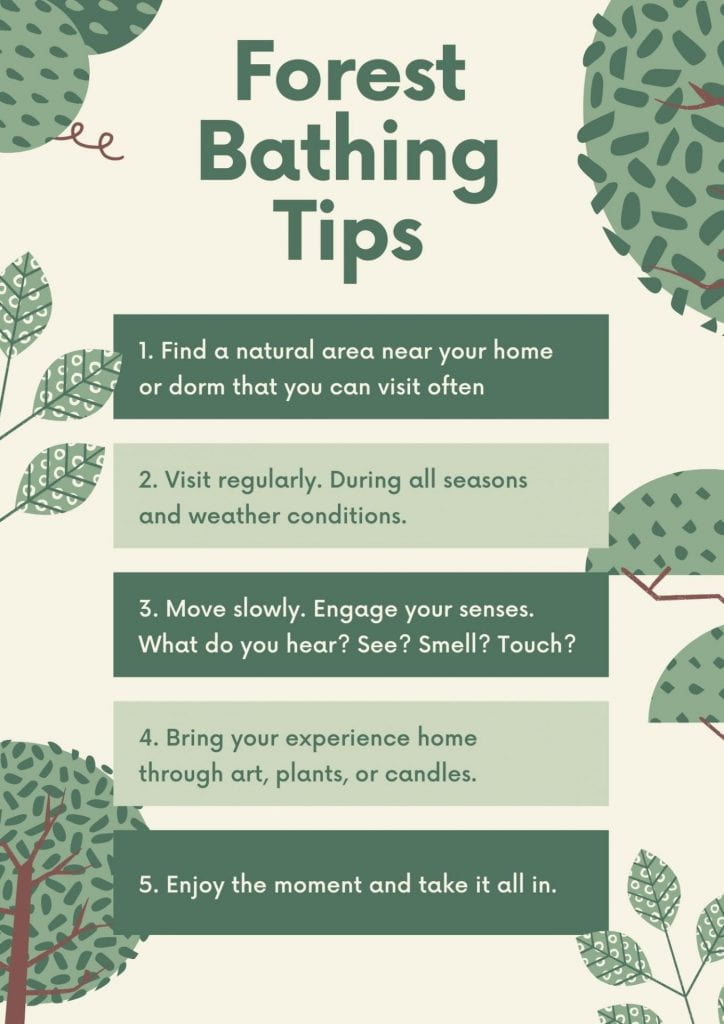
To truly "bathe" in the forest experience, you must engage all five senses.
- Sight: Observe the intricate details of a single leaf, the way light hits a plant, or the texture of a stone.
- Sound: If you are near a window, listen for birdsong or rustling leaves. If you are indoors, you can use ambient sounds of water or wind to ground your attention.
- Touch: Run your fingers over the rough bark of a branch or the cool surface of a stone.
- Smell: Deeply inhale the essential oils or the scent of your indoor plants.
- Taste: Some practitioners incorporate herbal teas to round out the sensory experience, grounding the practice in the physical reality of the present moment.
Phase 3: Reflection (3 Minutes)
End your session by acknowledging the shift in your body. Notice your breathing patterns and any reduction in muscle tension. This practice of reflection reinforces the habit and helps you carry that sense of calm into the rest of your day.
By consistently practicing these techniques, you are not just "taking a break"—you are actively training your nervous system to find safety and stillness amidst the chaos of modern life.
Navigating the "Nature Deficit" in a Digital-First Economy
As we move deeper into 2026, the term "Nature Deficit Disorder"—a concept popularized in the early 2000s—has taken on a new, urgent dimension. With the explosion of virtual reality workspaces and the integration of AI-driven productivity tools, the boundary between our professional lives and our domestic sanctuaries has blurred significantly. The result? A collective spike in sensory overload.
When you practice forest bathing at home, you aren't just engaging in a "wellness trend"; you are performing a form of cognitive hygiene. The modern urbanite is constantly processing high-density visual information, which keeps the amygdala—the brain’s threat-detection center—in a state of low-level, chronic activation. By intentionally curbing this input and replacing it with the low-arousal stimuli of natural textures and patterns, you effectively reset your cognitive load.
Why Your Nervous System Demands "Soft Fascination"
Research into environmental psychology suggests that natural environments possess a quality known as fractal complexity. Unlike the rigid, straight lines of our manufactured architecture, nature is built on repeating, self-similar patterns found in leaves, tree branches, and clouds. These fractals are processed by the human brain with significantly less effort than the sharp angles of a laptop screen or a smartphone interface.
- Reduced Cognitive Load: Shifting your gaze from a screen to a plant mimics the way our ancestors scanned the horizon, which is a restorative, rather than taxing, activity (Source 1).
- Parasympathetic Activation: The act of sensory slowing triggers the parasympathetic nervous system, the "rest and digest" branch that counteracts the "fight or flight" response triggered by back-to-back video calls (Source 3).
- The "Safety" Signal: Even in a small apartment, the presence of organic shapes sends an ancient, subconscious signal to your brain that you are in a safe, resource-rich environment.
Advanced Techniques: Integrating Nature into Your Daily Routine
Once you have mastered the 20-minute core session, you can begin to weave Shinrin-yoku into the fabric of your day-to-day existence. This is not about finding more time; it is about changing the quality of the time you already spend in your home.
Micro-Dosing Nature Between Tasks
In the age of the "always-on" professional, the most effective way to sustain mental performance is through micro-restoration. Instead of reaching for your phone during a five-minute break between meetings, try these "micro-doses" of forest bathing:
- The Window Gaze: Spend 60 seconds observing the movement of light through a tree or the swaying of branches. Research shows that even 40 seconds of nature-viewing can significantly boost attention and reduce the error rate in complex tasks (Source 3).
- The Tactile Reset: Keep a smooth stone or a piece of untreated wood on your desk. When you feel a surge of frustration, pick it up and focus solely on its temperature, texture, and weight for one minute.
- Aromatic Anchoring: Use a high-quality essential oil diffuser to release the scent of phytoncides—the volatile organic compounds trees release to protect themselves. These compounds, when inhaled, have been shown to boost the activity of natural killer (NK) cells in the human body (Source 3).
Optimizing Your Home Environment for Sensory Health
To maximize the benefits of your home practice, consider the "biophilic" potential of your living space. Biophilia, the innate human tendency to seek connections with nature, can be nurtured through intentional design choices that go beyond mere decoration.
- Circadian Lighting: Align your home lighting with the natural progression of the sun. Use warm, amber-hued bulbs in the evening to prepare your nervous system for rest, and brighter, blue-enriched light in the morning to signal alertness.
- Acoustic Masking: If you live in a noisy urban environment, use high-fidelity recordings of wind, rain, or forest birds to mask the "effort cues" of sirens, traffic, or construction.
- The "Green Threshold": Create a physical boundary—a rug, a specific chair, or a threshold made of indoor plants—that signifies the transition from your "work" space to your "nature" space.
The Role of Mindfulness and Intention
At its heart, Shinrin-yoku is a practice of presence. It is the antithesis of the "multi-tasking" culture that dominated the early 2020s. When you perform a home-based forest bath, you are training your brain to sustain attention on a single, non-demanding object or sensory experience.
Overcoming the "Performance" Trap
One of the most common pitfalls for beginners is the desire to "do it right." You might find yourself checking the clock, wondering if you are relaxed enough, or feeling guilty that you aren't in a "real" forest. This is a trap. Forest bathing at home is not about achieving a specific state of enlightenment; it is about meeting your body where it is.
If your mind wanders to your to-do list, don't judge yourself. Simply notice the thought, acknowledge that it is a product of your environment, and gently steer your attention back to the physical sensation of the air on your skin or the scent of the wood. This gentle redirection is, in itself, the practice.
Building Resilience Through Repetition
The benefits of forest bathing are cumulative. Much like physical exercise, the restorative effects of nature exposure are most potent when practiced consistently. By establishing a daily or weekly ritual, you are essentially building a "buffer" against the stressors of the modern world.
- Start Small: Commit to just five minutes a day. The consistency of the habit is more important than the duration of the session.
- Track Your State: Keep a simple journal to note how you feel before and after your session. You will likely notice a shift in your heart rate, a reduction in rumination, and an improvement in your overall mood (Source 3).
- Engage the Community: If you find the practice challenging to maintain alone, consider joining online groups or local wellness circles that focus on mindful nature connection. Sharing your experiences can deepen your commitment and provide new perspectives on how to adapt the practice to your specific home environment.
Adapting to Seasonal Shifts at Home
Your indoor forest bathing practice should not be static. Just as a forest changes with the seasons, your home environment can reflect these shifts, providing a grounding connection to the passage of time—something that is often lost in our climate-controlled, artificial environments.
Embracing the Winter Months
Winter can be a challenging time for nature connection, as the days shorten and the temptation to retreat indoors increases. However, this is also the season where the restorative power of Shinrin-yoku is most needed.
- Winter Scentscapes: Transition your essential oil diffusers to scents like balsam fir, pine, or cedar. These scents are not only psychologically evocative of winter forests but are also associated with the traditional Japanese practice of "forest bathing" as a way to maintain immune health during the colder months (Source 3).
- Indoor Forcing: If you have the space, try "forcing" bulbs like paperwhites or amaryllis. Watching the slow, steady growth of a plant from a dormant bulb can provide a powerful, visual reminder of resilience and the inevitability of spring.
- The Warmth Factor: Create a "cozy" sensory experience by incorporating soft, wool textiles or warm herbal teas. The goal is to create a physical environment that feels protective and nurturing, allowing you to fully relax into your sensory observations.
Celebrating the Spring and Summer Growth
As the year turns toward the warmer months, your home practice can become more vibrant and expansive. This is the time to open windows, invite the sounds of the outside world in, and focus on the visual complexity of new growth.
- Window-Side Gardening: Even if you only have a windowsill, you can cultivate a small collection of herbs or flowers. The act of tending to these plants—pruning, watering, observing—is a form of active forest bathing that keeps you connected to the life cycles of the natural world.
- Air Quality and Ventilation: Prioritize natural ventilation whenever possible. Allowing the air to circulate through your home can change the entire "feel" of your space, bringing in the humidity and subtle scents of the outdoors.
- The Power of Light: As the sun moves higher in the sky, use its changing position to highlight different areas of your home. A simple shift in where you sit for your 20-minute session can provide a fresh perspective and keep the practice from feeling monotonous.
The Intersection of Technology and Nature
In 2026, we are seeing a fascinating trend where technology is being used to enhance our connection to nature, rather than replace it. While the goal of Shinrin-yoku is to step away from screens, there is a role for high-quality audio and visual tools in creating an immersive environment, especially for those living in dense urban settings with limited access to green space.
Curated Soundscapes
If your home is located near a busy road or in a high-density apartment complex, the "effort cues" of urban noise can make it difficult to enter a state of deep relaxation.
- High-Fidelity Nature Audio: Use noise-canceling headphones to listen to high-quality, field-recorded audio of forests, streams, or rain. The key is to choose recordings that are "unstructured"—avoid music with a steady beat or lyrics, as these can trigger the brain's "task-focus" mode.
- Layering Sounds: If you have an indoor water feature, like a small desktop fountain, layer it with natural audio recordings. This can create a more complex, multi-dimensional soundscape that is more effective at masking background noise than either one alone.
Virtual Nature and Biophilic Design
While there is no substitute for the real thing, research from the University of Michigan suggests that high-definition nature imagery can still trigger a restorative response in the brain (Source 1).
- Digital "Windows": Use a large monitor or a high-definition projector to display slow-motion, 4K footage of forest canopies or flowing water. The key is the slowness of the movement; avoid fast-paced nature documentaries that demand narrative engagement.
- Smart Lighting: Modern lighting systems can be programmed to mimic the color temperature of the sun throughout the day. This is a subtle but effective way to reinforce your body's natural rhythms, supporting the physiological benefits of your forest bathing practice.
Addressing the Psychological Barriers
It is important to acknowledge that for many, the act of "doing nothing" is deeply uncomfortable. We are culturally conditioned to believe that our value is tied to our productivity. When you first start practicing forest bathing at home, you may experience feelings of restlessness, boredom, or even anxiety. This is a normal part of the process.
Transforming Boredom into Insight
Boredom is often the brain's reaction to the loss of high-intensity stimulation. When you remove the constant feedback loop of digital tasks, your brain initially struggles to find its "baseline."
- Stay with the Discomfort: Instead of reaching for a distraction, stay with the feeling of boredom. Observe it as if it were a physical sensation. Where do you feel it in your body? Is it a tightness in your chest or a restlessness in your limbs?
- The Shift: After a few minutes of staying with the feeling, you will often find that the boredom shifts into a state of "soft fascination." This is the point where your nervous system begins to recalibrate.
- Reframing Productivity: Remind yourself that this time is not "wasted." It is a vital investment in your long-term health and cognitive capacity. By lowering your cortisol levels and reducing mental fatigue, you are actually increasing your efficiency and creativity for the rest of your day.
The Importance of Self-Compassion
If you miss a session, or if you find it difficult to focus, do not let this become a source of stress. Forest bathing should be a source of relief, not another item on your to-do list. If you are having a particularly busy or stressful day, keep your session to the absolute minimum—even three minutes of deep breathing while looking at a plant is better than nothing.
Sustaining the Practice in the Long Term
The true power of Shinrin-yoku lies in its sustainability. It is not a "quick fix" but a lifelong habit of engagement with the living world. To keep your home practice fresh and meaningful, consider these strategies for long-term engagement:
- Seasonal Audits: Every three months, take a moment to re-evaluate your space. Are there new plants you can add? Are there ways to change your seating position to get a different view?
- The "Nature Journal": Keep a simple notebook where you record not just your sessions, but also your observations. What plants are growing? How has the light changed? What textures have you noticed? This can help you cultivate a "relationship-based" connection to your immediate environment, even if it is just a balcony or a single window (Source 1).
- Community Sharing: Share your experiences with others. You might be surprised to find that friends or family members are looking for similar ways to find calm. Creating a shared commitment can make the practice feel more social and supported.
Developing a "Nature-First" Mindset
As you deepen your practice, you may find that the benefits of forest bathing begin to extend beyond your 20-minute sessions. You might start to notice the natural world in your daily commute, the patterns of light on the pavement, or the way the trees change in your neighborhood. This "nature-first" mindset is the ultimate goal of Shinrin-yoku.
Extending the Benefits
The physiological changes you trigger during your home sessions—lower blood pressure, reduced cortisol, and increased immune activity—are not temporary. They have a "carry-over" effect that can improve your overall well-being throughout the day.
- Mindful Transitions: Use the skills you have learned in your home sessions to navigate transitions. When you move from work to home, or from a stressful situation to a calm one, take a moment to breathe and connect with your surroundings.
- The Protective Attitude: As your connection to nature deepens, you may find that your sense of stewardship for the environment grows. This is a common and beautiful side effect of the practice; when we feel connected to the living world, we naturally become more conscious of our impact on it (Source 3).
The Evolution of Your Sanctuary
Your home is not a static environment. It is a living, breathing space that evolves with you. By treating it as a sanctuary for your nervous system, you are reclaiming your right to rest and restoration in an increasingly demanding world. Whether you have a sprawling garden or a single, humble plant on your desk, the principles of Shinrin-yoku remain the same: slow down, open your senses, and let the living world hold you.
The Future of Home-Based Wellness
As we look toward the remainder of 2026 and beyond, the integration of nature into our homes will likely become a cornerstone of public health. We are beginning to understand that our well-being is not just about the absence of disease, but about the presence of a supportive, natural environment.
Why This Matters Now
The global shift toward remote and hybrid work has fundamentally changed our relationship with our homes. They are no longer just places to sleep; they are our offices, our gyms, and our centers of social connection. This shift makes the creation of a "nature-adjacent" space not just a luxury, but a necessity for long-term health.
- Resilience in the Face of Uncertainty: The world remains a complex and often overwhelming place. Having a practice that allows you to regulate your nervous system at will is a powerful tool for building personal resilience.
- The Power of Small Actions: We often look for large-scale solutions to complex problems. But the most profound changes often start with small, consistent, and intentional actions. Your daily 20-minute session is a testament to the power of individual agency.
Looking Ahead
As more people adopt these practices, we can expect to see a shift in how we design our homes and our urban environments. The demand for more green space, better light, and more natural materials in our living and working areas is already growing. By participating in this movement, you are part of a larger, global shift toward a more conscious and nature-connected way of living.
Practical Tips for Busy Professionals
If you are a professional working in a demanding field, you might feel that you don't have the "luxury" of 20 minutes for yourself. However, the data is clear: the time you invest in forest bathing is time you gain back in increased focus, reduced errors, and improved emotional regulation.
Integrating Nature into the "Deep Work" Flow
The concept of "Deep Work"—the ability to focus without distraction on a cognitively demanding task—is the gold standard for productivity. Forest bathing can be the perfect precursor to a deep work session.
- The Pre-Work Reset: Before you dive into a complex project, take five minutes to ground yourself. Use a scent, a touch-based anchor, or a brief visual focus on a natural object. This signals to your brain that the "scattered" mode of the day is over and the "focused" mode is beginning.
- The Post-Work Decompression: After a long day, use your home session to "let the day land." This prevents the stress of the workday from spilling over into your evening, allowing you to actually rest and recharge.
Setting Boundaries
Part of protecting your practice is setting boundaries. If you live with others, communicate the importance of your 20-minute session. Explain that this is not "time off" but a vital part of your health routine. Most people will be understanding, and you might even inspire them to start their own practice.
The Science of Sensory Complexity
To understand why this practice is so effective, we must look at the way our brains process sensory information. In our modern, urbanized environments, we are subjected to a very narrow range of sensory input. Most of our environment is designed for utility and efficiency, with straight lines, uniform surfaces, and artificial light.
The "Default Mode Network"
When we are not focused on a specific task, our brain enters a state known as the Default Mode Network (DMN). This is often associated with rumination, worry, and the "mind-wandering" that can lead to stress and anxiety.
- Interrupting the Loop: Forest bathing provides the sensory complexity needed to interrupt the DMN and shift the brain into a more grounded, present-focused state. The gentle, shifting patterns of nature—the way light moves across a leaf, the subtle rustle of air—provide enough stimulation to keep the brain engaged without demanding the high-level cognitive processing that leads to fatigue.
- The Restoration Hypothesis: The Attention Restoration Theory (ART) suggests that natural environments allow our "directed attention" to rest. Because nature provides "soft fascination," it doesn't require the same level of mental effort as navigating a busy street or managing a complex digital project. This allows our cognitive resources to replenish, leading to improved performance when we return to our tasks.
The Role of Community and Shared Practice
While forest bathing at home is inherently a personal practice, it can be greatly enhanced by community. The act of sharing your experience, discussing the challenges, and celebrating the breakthroughs can provide a sense of accountability and connection.
Finding Your "Nature Circle"
Look for online forums, social media groups, or local organizations that focus on mindful nature connection. Sharing your tips for creating a home-based space, or discussing the benefits you have experienced, can be incredibly rewarding.
- Collaborative Learning: Everyone has a different home environment, and everyone has different challenges. By sharing your experiences, you can learn new ways to adapt the practice that you might not have thought of on your own.
- The Power of Shared Intent: There is something powerful about knowing that you are part of a global movement of people who are all seeking to reconnect with nature. This shared intent can deepen your own commitment and provide a sense of belonging.
Building a Legacy of Well-being
As you continue to practice, you might find that you become a "nature advocate" in your own life. You might start to talk to friends about the benefits of Shinrin-yoku, or you might find yourself naturally incorporating more nature-based elements into your own home and work environments. This is how change happens—one person, one room, and one 20-minute session at a time.
A Final Note on the "Why"
The world will continue to be fast-paced, digital-first, and demanding. That is the reality of 2026. But you have the power to create a space of calm, a sanctuary where you can return to yourself. By practicing forest bathing at home, you are not just escaping the world; you are equipping yourself to live in it with more presence, more resilience, and more joy.
It is a simple, ancient, and deeply human practice. It requires no special equipment, no expensive memberships, and no wilderness treks. It only requires your willingness to slow down, to pay attention, and to acknowledge the profound, restorative power of the living world. Whether you are sitting by a window, surrounded by plants, or simply holding a stone in your hand, you are engaging in a practice that has been used for generations to find balance and peace.
As you move forward, keep these three things in mind:
- Be Kind to Yourself: There is no "perfect" way to do this. Your practice will be as unique as your home and your life.
- Stay Curious: Always be looking for new ways to engage your senses and deepen your connection to nature.
- Remember the Goal: It’s not about achieving a specific state, but about allowing your nervous system to downshift and finding a moment of stillness in the midst of the chaos.
The forest is not just a place you go; it is a way of being. By bringing that "forest" into your home, you are bringing a sense of peace, balance, and vitality into your life. And that, in the fast-paced reality of 2026, is a truly radical act.
References
-
Treeming — Forest Bathing at Home That Actually Works – Treeming.org, 2026
-
Happieroutdoors — How to Forest Bathe: Step-by-Step Guide for Beginners, 2026
-
Naturesensemble — Forest Bathing for Beginners: A Guide to Nature’s Calm, 2026
-
Wikihow — How to Do a Forest Bath: 12 Steps (with Pictures) – wikiHow, 2026
-
Realitypathing — How to Create a Forest Bathing Ritual at Home, 2026
-
Learningcommons — I Tried It! Shinrin-yoku, aka Forest Bathing – Learning Commons, 2026
-
Heartofnature — Forest Bathing at Home: Simple Ways to Create Natural Calm in Your …, 2026
-
Ecotherapyheals — How To Forest Bathe: 10 Tips For New Forest Bathers, 2026