Daily Self-improvement Tips That Actually Work
The landscape of personal development has shifted dramatically as we move through 2026. Gone are the days of toxic hustle culture and unrealistic "overnight" transformations. Today, the most effective self-improvement strategies focus on capability over perfection and the power of incremental, science-backed habits. If you have ever felt stuck in a rut, you aren't alone—but the solution isn't a massive overhaul. It is the art of 1% daily improvement.
Research consistently shows that sustainable growth is achieved through small, consistent actions rather than dramatic, unsustainable changes. By implementing tiny, intentional shifts in your routine, you can leverage the power of compound growth to transform your mindset, productivity, and health. In this guide, we explore the most practical, research-backed ways to better yourself daily in 2026.
Why Small Habits Trump Massive Overhauls
Many people fail at self-improvement because they rely on motivation, which is fleeting and emotional. In 2026, the focus has shifted toward systems-based habits. Systems are repeatable routines that function even when your willpower is low. By focusing on small, actionable steps, you avoid the overwhelm that often leads to procrastination and failure.
The "1% rule"—improving by just one percent each day—is the cornerstone of long-term success. Over a year, these tiny gains compound into remarkable results. Whether you are aiming for better career development, emotional intelligence, or physical fitness, the secret lies in your daily choices.
The Foundation: Starting Your Day with Purpose
Your morning sets the tone for your entire day. A structured morning routine is not just a trend; it is a tool for emotional well-being and focus. By starting with intention, you provide yourself with a sense of control before the chaos of the day begins.
Creating a Productive Morning Routine
A powerful routine does not need to be complex. Consider incorporating these elements:
- Mindfulness/Meditation: Elevate your energy levels and clear your mental space.
- Physical Movement: Even ten minutes of light exercise can jumpstart your metabolism and mood.
- Goal Setting: Write down your top priorities for the day to ensure you are working on what truly matters.
The Power of Daily Gratitude
Practicing gratitude is a scientifically proven method to enhance your mindset. By reflecting on what you are thankful for, you shift your focus from what is lacking to what is present. This simple habit helps rewire your brain to look for solutions rather than dwelling on problems, fostering a more resilient and positive outlook.
Intellectual Growth in the Age of Hybrid Learning
In 2026, continuous learning is no longer a luxury; it is a necessity. The most successful individuals are those who treat their minds like muscles, constantly stretching them through new information and skills.
Read Every Day
Books are concentrated sources of wisdom. Whether you prefer physical books, audiobooks, or digital formats, making reading a daily habit exposes you to new perspectives and keeps your brain sharp. Regular reading has been shown to improve memory function and slow cognitive decline, making it one of the most high-leverage activities for long-term growth.
Expanding Your Skillset
Never stop being a student. Whether it is learning a new language, picking up a recreational hobby like pottery or coding, or taking an online seminar, these activities force you to adapt. In 2026, the "hybrid learning" model—combining traditional study with digital exploration—is the most effective way to stay relevant and curious.
Building a Growth Mindset and Emotional Resilience
Your beliefs shape your behavior. If you believe you are stuck, you will be. If you believe you can improve, you will find a way. This is the essence of a growth mindset.
Replacing Self-Doubt with Progress Thinking
Stop focusing on "I can't" and start focusing on "I can improve." A great technique is to write down three small "wins" each day. This builds confidence and reinforces a track record of success. When you celebrate small victories, you create a positive feedback loop that keeps you motivated to tackle larger challenges.
Using Failure as Data
In 2026, we are learning to view failure as data, not defeat. When something goes wrong, analyze it objectively. What can you learn from the situation? How can you adjust your system for next time? This shift in perspective turns setbacks into stepping stones, allowing you to iterate on your life with the same precision as a tech startup.
The 2026 Shift: Capability Over Perfection
The most significant trend in self-improvement for 2026 is the move away from perfectionism. Perfectionism is a paralyzing force that often leads to inaction. Instead, focus on capability. Can you do the task? Can you learn the skill? Can you show up today, even if it’s not your best day?
By prioritizing action over the "perfect" result, you build momentum. This is the core of the new three-part improvement formula:
- Systemize: Build habits that don't rely on motivation.
- Iterate: Use failure as feedback to tweak your approach.
- Compound: Recognize that 1% improvements lead to exponential long-term growth.
Sustaining Momentum Through Intentional Choices
Consistency is the hardest part of any self-improvement journey. To stay on track, you must surround yourself with positive influences. This includes the content you consume, the people you interact with, and the environment you create for yourself.
If you feel overwhelmed, simplify. Pick one or two habits from this list and master them before adding more. Remember, the goal is not to change your entire life overnight, but to become a better version of yourself through daily, intentional, and sustainable action.
Leveraging Financial Well-being as a Growth Catalyst
In the current economic climate of 2026, the intersection of mental clarity and financial well-being has become a primary pillar of personal development. Many individuals find that financial stress acts as a significant "growth blocker," consuming cognitive bandwidth that could otherwise be directed toward skill acquisition or relationship building. By taking control of your personal finances, you aren't just saving money—you are buying yourself the mental freedom to pursue higher-order personal goals Source 5.
Strategic Budgeting for Peace of Mind
Financial wellness is less about restriction and more about alignment. When your spending reflects your deepest values, you eliminate the guilt that often accompanies impulsive choices.
- Audit Your Subscriptions: Identify digital services you no longer use and reallocate those funds toward a skill-based course or a gym membership.
- The 24-Hour Rule: For non-essential purchases, wait 24 hours. This simple friction point prevents emotional spending and helps you maintain your focus on long-term wealth building.
- Automate Savings: By removing the decision-making process from your savings routine, you ensure that your financial foundation grows in the background while you focus on your personal development tasks Source 5.
Investment in Human Capital
The most reliable return on investment in 2026 is the investment you make in your own capabilities. Whether it is professional certification, mentorship coaching, or specialized workshops, prioritizing your human capital creates a compounding effect on your career trajectory.
The Science of Social Connection and Networking
We are living in an era of unprecedented digital connectivity, yet many report feeling more isolated than ever. Self-improvement is not a solitary pursuit; it is heavily influenced by the people you choose to surround yourself with. Research indicates that your social circle acts as a "normative anchor"—you are likely to adopt the habits, vocabulary, and ambition levels of those you spend the most time with Source 5.
Curating Your Environment
Your environment includes both your physical space and your digital feed. If your social media consumption consistently lowers your mood or triggers feelings of inadequacy, it is time for a radical audit.
- Seek Out "Growth Peers": Find a mentor or a partner who is also committed to self-improvement. Regularly discussing your goals with someone else increases your accountability significantly.
- Active Listening: Improve your relationships by practicing deep, active listening. This is a subtle yet powerful skill that builds trust and fosters more meaningful connections in both professional and personal settings Source 5.
- Conflict Resolution: Approach disagreements as opportunities to grow your emotional intelligence. Instead of trying to "win" a conversation, focus on understanding the other person's perspective to arrive at a collaborative solution.
Mastering Time Management Through Deep Work
In a world of constant notifications and "always-on" culture, the ability to focus is a superpower. The modern professional is often distracted by shallow tasks that provide the illusion of productivity without the reality of progress. To truly improve, you must reclaim your time from the distractions of the digital age.
The Deep Work Protocol
Popularized by the focus on productivity hacks in 2026, the concept of "Deep Work" involves dedicating long, uninterrupted blocks of time to cognitively demanding tasks.
- Time Blocking: Dedicate specific hours of your day to your most important project before checking emails or social media.
- The "No-Device" Zone: Create a physical boundary where technology is not allowed. This could be your desk during a creative sprint or the dining table during meals.
- Prioritize High-Leverage Tasks: Not all tasks are created equal. Focus on the 20% of your activities that yield 80% of your results, a classic application of the Pareto Principle applied to daily life Source 5.
Managing Energy, Not Just Time
High performance is not about how many hours you work; it is about how much energy you bring to those hours. Recognize your personal "peak performance" windows—some people are naturally more creative in the morning, while others hit their stride in the late afternoon. Schedule your most difficult tasks during these high-energy periods to maximize your output.
Physical Resilience as the Engine for Growth
You cannot separate your mental progress from your physical state. In 2026, the link between nutrition, exercise, and cognitive function is clearer than ever. A body that is well-fueled and regularly challenged provides the stamina required to sustain a long-term self-improvement journey.
Sustainable Fitness Habits
Fitness is often treated as a punishment for past choices, but it should be viewed as a tool for future capability.
- Movement as Maintenance: You don't need to be an athlete to benefit from exercise. Consistency in walking, stretching, or resistance training is far more effective than sporadic, high-intensity workouts that lead to burnout.
- Nutritional Awareness: Focus on fueling your brain. Research suggests that diets rich in whole foods and hydration directly correlate with better focus and mood stability.
- Restorative Sleep: Sleep is not "downtime"; it is when your brain processes the information you learned during the day. Prioritizing 7–8 hours of quality sleep is the single most effective performance-enhancing strategy available to you.
Cultivating Emotional Intelligence and Empathy
Self-improvement is hollow if it does not lead to better interactions with the world around you. Emotional intelligence (EQ)—the ability to identify and manage your own emotions and the emotions of others—is increasingly valued over raw technical skill in the modern workplace.
Building Self-Awareness
Self-awareness is the starting point of all change. Without knowing your triggers, your strengths, and your blind spots, you are essentially flying blind.
- Journaling for Insight: Spend five minutes at the end of the day reflecting on your emotional state. Why did you react a certain way in a meeting? What could you have done differently?
- Soliciting Feedback: Ask trusted colleagues or friends for honest, constructive feedback. It can be uncomfortable, but it provides a "mirror" to your personality that you cannot see on your own.
- Practicing Empathy: Actively try to walk in someone else's shoes. This practice reduces conflict and enhances your ability to work within diverse teams, a critical skill for the globalized 2026 workforce.
The Role of Mindfulness in a Distracted World
Mindfulness is no longer just a trend; it is a vital mental hygiene practice. In an era where we are bombarded with information, the ability to return to the present moment allows you to remain calm under pressure and make decisions based on logic rather than anxiety.
Simple Mindfulness Techniques
You don't need to spend hours on a meditation cushion to experience the benefits of mindfulness.
- Breath Awareness: Take three deep, intentional breaths when you feel overwhelmed. This simple physiological hack triggers your parasympathetic nervous system, lowering your heart rate instantly.
- Single-Tasking: Give your full attention to one activity at a time. Whether you are writing a report or washing the dishes, being fully present improves the quality of your work and your enjoyment of life.
- Digital Detox Periods: Designate specific times during the week to disconnect entirely from digital devices. This allows your mind to reset and prevents the "information fatigue" that plagues many in the digital age.
Navigating Career Transitions with Confidence
The career landscape in 2026 is fluid. The days of a single, lifelong career path are behind us. Today, professional growth is defined by your ability to pivot, upskill, and remain agile. Whether you are looking for a promotion or a complete career shift, the principles of self-improvement remain the same: start small, learn constantly, and iterate.
Skill Acquisition for the Future
The most valuable skills in 2026 are those that are "future-proof"—soft skills like communication, critical thinking, and adaptability, combined with technical literacy.
- Micro-Learning: Use 15-minute pockets of time to watch educational videos or read industry articles. This "stacking" approach to learning allows you to master new topics without requiring massive blocks of time.
- Networking with Intent: Don't just network to "get something." Build genuine relationships by offering value to others first. A strong, mutually beneficial professional network is your greatest asset in any career transition.
- Reframing Challenges: When you face a career setback, reframe it as a learning opportunity. Ask yourself: "What skill was I missing that would have changed this outcome?" Then, make it your goal to acquire that skill.
Developing a System for Long-Term Resilience
Resilience is the ability to bounce back from adversity. It is not something you are born with; it is a muscle you build through repeated exposure to challenges and intentional recovery. As you continue your self-improvement journey, you will inevitably face obstacles. How you handle these moments will define your success.
The Resilience Framework
- Acknowledge the Emotion: It is okay to feel frustrated or disappointed when things don't go to plan. Labeling the emotion reduces its power over you.
- Focus on the Controllables: In any situation, there are things you can change and things you cannot. Spend 100% of your energy on the aspects within your control.
- Iterate and Adjust: Once the initial emotional response passes, look at the situation objectively. What is the "data" here? How can you adjust your strategy for the next attempt?
The Power of Positive Affirmations and Visualization
While often dismissed as "woo-woo," the psychological power of self-talk and visualization is backed by significant research. Your internal monologue acts as a script for your behavior. If you constantly tell yourself you are struggling, you will struggle. If you affirm your capacity for growth, you will find opportunities to grow.
Implementing Mindset Shifts
- The "Yet" Mindset: Whenever you catch yourself saying "I don't know how to do this," add the word "yet." It shifts your brain from a state of limitation to a state of potential.
- Visualization of Process: Don't just visualize the result; visualize the process. Imagine yourself sitting down to study, choosing the healthy meal, or staying calm during a conflict. This primes your brain to execute those actions when the moment arrives.
- Positive Affirmations: Select three statements that reflect your growth goals and repeat them during your morning routine. This helps solidify your identity as someone who is in the process of becoming better.
Understanding the Compound Effect of Small Habits
The most important takeaway for 2026 is that you do not need to be a hero to change your life. You only need to be a consistent practitioner of small habits. The "compound effect" means that your small, daily improvements will eventually cross a threshold where they begin to produce outsized, exponential results.
Tracking Your Progress
Tracking is the most effective way to maintain momentum. When you can see your progress, you are far more likely to continue.
- Habit Stacking: Attach a new habit to an existing one. For example, "After I pour my morning coffee, I will write down three goals for the day."
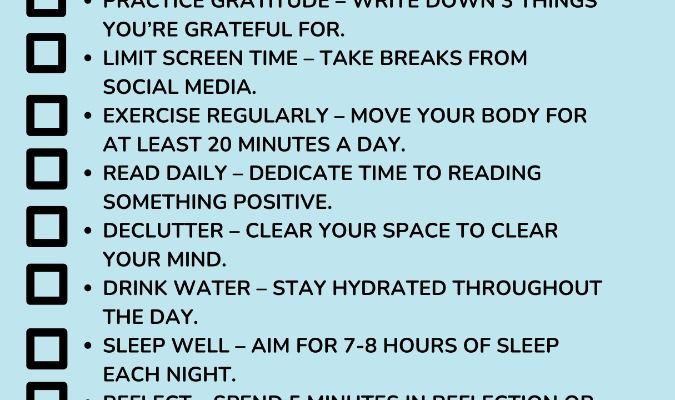
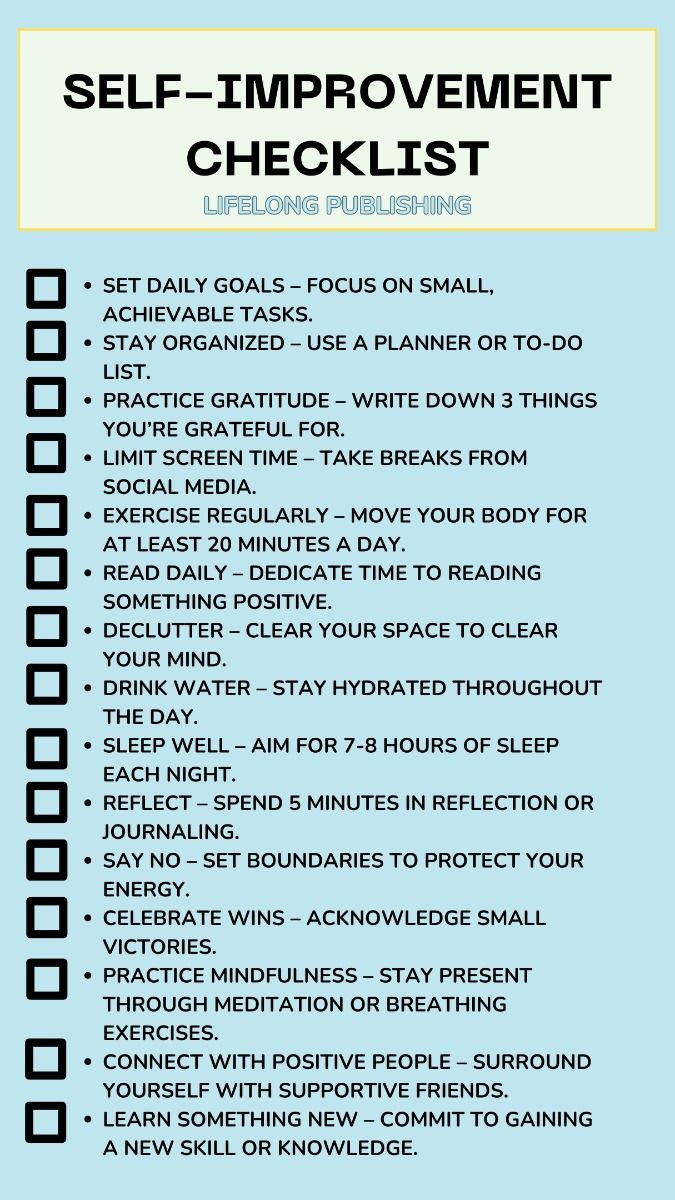
- Visual Checklists: Use a physical or digital habit tracker. The simple act of checking off a box releases a small amount of dopamine, which encourages you to continue the streak.
- Monthly Reviews: Once a month, look back at your progress. What habits stuck? Which ones need adjustment? This is your opportunity to "debug" your lifestyle and ensure you are still heading in the right direction.
The Importance of Self-Compassion
Finally, remember that self-improvement is not about achieving a state of "perfection." You will have days where you fail, days where you lack motivation, and days where you feel like you are moving backward. This is not a sign of failure; it is a normal part of the human experience.
Being Your Own Best Ally
- Treat Yourself Like a Friend: If a friend came to you with a mistake, you wouldn't berate them. You would offer support and encouragement. Extend that same grace to yourself.
- Focus on the "Why": When you lose motivation, reconnect with your "why." Why did you start this journey? Who do you want to become? This purpose will carry you through the difficult days.
- Celebrate the Journey: Don't wait until you reach a major milestone to celebrate. Celebrate the fact that you showed up, that you tried, and that you are committed to your growth. That commitment alone puts you ahead of the vast majority of people.
Redefining "Success" in the Modern Era
As we continue through 2026, the definition of success is being rewritten. It is no longer just about external markers like income or job title. It is about internal alignment—how well your daily actions match your values, how resilient you are in the face of change, and how much you enjoy the process of becoming.
The Holistic Approach to Growth
- Integrate Your Life: Stop trying to keep "work" and "life" in separate silos. Instead, find ways to make your professional pursuits serve your personal growth, and your personal growth improve your professional output.
- Prioritize Vitality: Your health, your relationships, and your mental clarity are the foundation upon which all other success is built. Never sacrifice these for short-term gains.
- Stay Curious: The world is changing faster than ever. The most successful people are not the ones who know the most, but the ones who are the most adaptable and eager to learn.
Creating a Sustainable Growth System
To ensure that your self-improvement efforts last beyond the initial excitement, you must build a system that is resilient to the inevitable ups and downs of life.
Designing Your "Growth Dashboard"
Think of your life as a project. You need systems to monitor your health, your learning, and your goals.
- Weekly Planning: Spend 15 minutes on Sunday to plan your upcoming week. Identify your top three priorities and block out time for them.
- Environment Design: Optimize your physical and digital space to make good habits easy and bad habits hard. If you want to read more, put a book on your pillow. If you want to eat healthier, clear your pantry of processed snacks.
- Accountability Partners: If you can, find a partner or join a community of like-minded individuals. Sharing your progress and your struggles makes the journey less lonely and more effective.
The Future of Self-Improvement
As we look toward the remainder of 2026 and beyond, the focus on capability, systems, and intentionality will only grow. The tools available to us are better than ever, but the core principles remain the same: small, consistent actions taken daily, fueled by a clear sense of purpose.
Your Call to Action
You don't need to change everything at once. You don't need to wait for Monday, or the start of the month, or the perfect set of circumstances. You have everything you need to start right now.
Pick one small habit—whether it is reading for five minutes, drinking an extra glass of water, or setting a single goal for tomorrow—and commit to it. That one small action is the first step toward the best version of yourself. Your journey is not about reaching a destination; it is about the constant, beautiful process of becoming better, one day at a time. The compound effect is waiting. All you have to do is start.
The Architecture of Habit Stacking
In 2026, the most effective way to integrate new behaviors into a busy life is through habit stacking. This psychological strategy, popularized by behavioral scientists, involves anchoring a new behavior to an established routine. By "piggybacking" a new action onto an existing neural pathway, you drastically reduce the friction required to initiate change Source 1.
Designing Your Stacks
To build a sustainable stack, identify a "trigger" habit—something you do without fail every single day—and attach your new goal to it.
- The Morning Stack: After pouring your first cup of coffee, immediately open your journal to write down three daily priorities.
- The Commute Stack: While waiting for the train or sitting in traffic, listen to a 10-minute educational podcast to satisfy your intellectual growth requirements Source 4.
- The Evening Stack: Before brushing your teeth, take two minutes to lay out your workout clothes for the following morning. This simple preparation removes a common barrier to physical exercise.
By creating these sequences, you stop relying on fickle motivation and start relying on the automaticity of your environment. When a habit becomes a ritual, the mental effort to perform it drops to near zero, allowing you to sustain progress over months and years rather than just days Source 2.
Optimizing Your Digital Ecosystem for Focus
The "always-on" nature of 2026 technology is a primary antagonist to self-improvement. If your phone is the first thing you touch in the morning, you have already ceded control of your attention to algorithms designed to maximize engagement, not your personal growth. To combat this, you must treat your digital environment with the same intentionality as your physical workspace.
The Digital Audit
- Notification Minimalism: Disable all non-human notifications. If an app isn't a direct communication tool from a person you know, it does not deserve to interrupt your flow state.
- Curated Feeds: Unfollow accounts that trigger comparison or anxiety. Replace them with sources that provide actionable knowledge or inspiration. Your feed should be a reflection of the person you are becoming, not the person you are trying to escape.
- The "Grayscale" Hack: Turning your phone screen to grayscale makes it significantly less stimulating, which can help break the cycle of mindless scrolling and reclaim your cognitive bandwidth for deep work Source 5.
The Art of Micro-Learning
In an era of rapid professional evolution, the ability to learn quickly is the most valuable currency. Traditional degrees are increasingly being supplemented—or replaced—by micro-learning, which involves digesting small, specialized chunks of information that can be applied immediately.
Strategies for Rapid Skill Acquisition
- The 20-Hour Rule: While it takes 10,000 hours to master a craft, research suggests you can become reasonably competent in most skills within 20 hours of focused, deliberate practice. Break your learning into 45-minute daily sessions to hit this threshold in less than a month Source 3.
- Just-in-Time Learning: Instead of hoarding information (like buying books you never read), learn only what you need to solve a current problem. This keeps your growth relevant and ensures you retain the knowledge because you are applying it in real-time.
- Teach to Learn: The "Feynman Technique" remains the gold standard for retention. After learning a new concept, try to explain it in simple terms to a colleague or even to an empty room. If you cannot explain it simply, you don’t yet understand it well enough Source 3.
Managing the "Identity-Behavior" Gap
Self-improvement often fails because people try to change their behavior without changing their identity. If you view yourself as a "lazy person" trying to "go for a run," you will constantly battle your own self-image. The breakthrough occurs when you shift your internal narrative: "I am a runner."
Shifting Your Self-Perception
- Identity-Based Goals: Instead of focusing on the outcome (e.g., "I want to lose 10 pounds"), focus on the identity (e.g., "I want to become the type of person who never misses a workout"). Every small action you take acts as a "vote" for the type of person you are becoming.
- Evidence Collection: When you feel like an imposter, look at your progress tracker. Your past actions are the objective evidence that you have already begun the transformation. You are not "trying" to improve; you are currently in the process of becoming Source 4.
Navigating Social Dynamics and Boundaries
As you grow, your interests and values may begin to diverge from those of your existing social circle. This is a common, though often uncomfortable, byproduct of personal development. Maintaining your growth while navigating these relationships requires clear communication and firm boundaries.
Protecting Your Growth Space
- Communicate Your "Why": You don't need to apologize for your growth. Simply explain that you are prioritizing certain goals—like early morning exercise or reading time—to reach a personal milestone. True friends will support your journey.
- Boundaries as Respect: Setting boundaries isn't about pushing people away; it’s about managing your limited energy. If a social situation consistently leaves you drained or discouraged, it is perfectly acceptable to limit your exposure to those environments.
- Mentorship Circles: Actively seek out communities where growth is the baseline. Whether it is a local hobby group, a professional network, or an online community, surrounding yourself with others who are also "climbing" makes the exertion feel like the standard operating procedure rather than an anomaly Source 5.
The Physiological Basis of Decision Quality
Your ability to make good decisions—to choose the salad over the fries, or the book over the screen—is a finite resource often depleted by the end of the day. This phenomenon, known as decision fatigue, explains why we are more likely to fail at our habits in the evening. To maintain high-level performance, you must manage your decision architecture.
Reducing Daily Friction
- Decision Pre-Loading: Make as many decisions as possible the night before. If you decide what to eat, what to wear, and what to work on before you go to sleep, you preserve your "decision budget" for the challenges of the next day.
- The Environment Default: Structure your physical environment so that the "right" choice is the easiest one. Keep your gym bag by the door, your water bottle on your desk, and your phone in another room during work hours. When the right choice requires less effort than the wrong one, your success rate will naturally climb Source 4.
References
-
Plantoorganize — 50 Ways to Self-Improve (Simple Daily Habits That Actually Work), 2026
-
Medium — 20 Simple Self Improvement Habits That Make You a Better … – Medium, 2026
-
Lifehack — 42 Practical Ways to Start Working on Self-Improvement, 2026
-
Afaeducation — How to Improve Myself Everyday: 15 Best Tips for Continuous Self-Growth, 2026
-
Learnsoul — 7 Powerful Ways to Improve Yourself Daily That Actually Work, 2026
-
Betterup — How To Improve Yourself Every Day: 20 Ways To Be Better, 2026
-
Developgoodhabits — 23 Exercises & Activities to Practice Daily Self-Improvement, 2026
-
Thelifeology — Self-Improvement Strategies: Practical Ways to Grow Every Day, 2026